About 126 minutes
Folk Tales of Breffny — Inside the Classic
Folklore
28,836 recorded words. 4 minutes difference from this book's estimate.
View Gutenberg source #54724
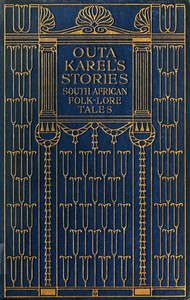
The catalog record for Outa Karel's Stories: South African Folk-Lore Tales — Reading Companion provides practical reading context through 29,866 words, 2 hr 10 min estimated reading time, and 6 detected text sections.
The text analysis averages about 16.1 words per sentence, while the detected sections provide another way to judge how the source is divided.
Project Gutenberg metadata also associates the work with “Folklore -- South Africa,” connecting these edition facts with the source record’s subject description.
Explore this collection
These alternatives are selected using recorded categories and estimated reading time.
About 126 minutes
Folklore
28,836 recorded words. 4 minutes difference from this book's estimate.
View Gutenberg source #54724About 135 minutes
Folklore
31,039 recorded words. 5 minutes difference from this book's estimate.
View Gutenberg source #30577About 139 minutes
Folklore
31,866 recorded words. 9 minutes difference from this book's estimate.
View Gutenberg source #32375Search stored excerpts and compare books → Choose by your preferences →
Choices use stored catalog measurements. Estimates vary with reading speed. A shared category is a catalog label, not a claim that two books have the same argument or literary quality.
Search reads excerpt text stored with this catalog and links to its associated Gutenberg record. The connection is stored in the site database; this tool does not recheck that every excerpt is word-for-word identical to that external record. Excerpt search does not cover every chapter and does not verify historical publication dates.
Catalog snapshot checked: 2026-09-26. Coverage: 91 public books, 91 available source excerpts.
Calculated from edition completeness, EPUB availability, text structure and catalogue metadata. Not a user rating.
Total of 100 points, scaled to a 2.5-5.0 range. Editions with an empty description or a missing EPUB file are not scored.
Public-domain source text
The source text is kept in the dedicated reader, separate from this catalogue record and its commentary.
Outa Karel's stories are told in a distinctive voice that blends the cadences of the Afrikaans Taal with English translation. The frame narrator, an old Native man, addresses his listeners as "my baasjes," creating an intimate, oral storytelling atmosphere. The tales themselves shift between brisk, dialogue-driven action and more expansive descriptive passages, as seen in the foreword's evocation of "moonlit spaces filled with soft mystery." This note examines how Metelerkamp uses these shifts in pace and voice to shape the reader's experience.
The stories are framed by the figure of Outa Karel, whose speech patterns are rendered with careful attention to colloquial rhythm. Phrases like "Yes truly" and interjections such as "Ach" and "Alle wereld!" give the narration a spoken quality. The narrator frequently checks in with his audience: "my baasjes" appears repeatedly, reinforcing the sense of a live performance. This voice is not uniform; it modulates between the old man's gentle, explanatory tone and the more urgent, exclamatory style when characters are in danger. The effect is a layered narrative where the teller's personality colors every tale.
Metelerkamp varies the pace by alternating rapid-fire dialogue with slower, sensory description. In the excerpt from "The Sun," the action accelerates when Jakhals carries the little Sun: short lines of dialogue and verbs like "trotted," "jumped," and "bucked" create a frantic rhythm. Conversely, the foreword lingers on "noontides of tropic heat" and "throbbing summer nights," using longer, flowing sentences. This contrast is structural: the tales often open with a calm setting, then shift into brisk, conflict-driven scenes. The pacing mirrors oral storytelling, where a teller might speed up for excitement and slow down for atmosphere.
Certain words and motifs recur across the excerpts, linking the tales. "Frightenness" and "hotness" are coinages that suggest a childlike or translated quality, emphasizing the primitive worldview Metelerkamp notes in her foreword. The motif of burning—Jakhals's tail, the Sun's heat—appears in multiple stories, often as a consequence for trickery. Animals like Jakhals (jackal) and Oom Leeuw (uncle lion) are consistently anthropomorphized with human titles and speech. These repeated elements create cohesion across the collection, even as the tales vary in plot. The language itself, with its blend of English and Afrikaans-inflected terms, marks the stories as translations that retain traces of their original tongue.
Readers may find it useful to read these tales aloud, as the rhythm and repetition are designed for oral delivery. Pay attention to how the narrator's interjections and the shifts between fast dialogue and slow description guide the emotional arc of each story. The collection rewards attention to its linguistic texture—those small, invented words and colloquial phrases that carry the flavor of a vanished storytelling tradition.
There’s a particular comfort in Outa Karel’s unhurried voice, the way the stories breathe between his quiet asides. It reminds me of evenings spent with Folk Tales of Breffny — Inside the Classic, where the telling matters as much as the tale. Both feel like conversations half-remembered, warm and lingering, as if the fire’s still burning somewhere. Folk Tales of Breffny — Inside the Classic holds that same gentle pause, that same patient hush.
Your answers remain private and are stored only in this browser.









