About 53 minutes
Folk-lore in Borneo — Text and Context
Folklore
12,104 recorded words. 7 minutes difference from this book's estimate.
View Gutenberg source #30233
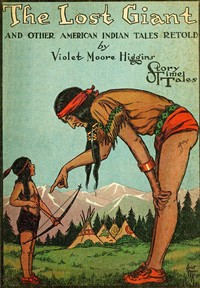
This digital edition of The Lost Giant, and Other American Indian Tales Retold — Story, Setting & Ideas is described by source-level measurements including 10,527 words, 46 min estimated reading time, and 11 detected text sections.
The text analysis averages about 23.2 words per sentence, while the detected sections provide another way to judge how the source is divided.
Project Gutenberg metadata also associates the work with “Indians of North America -- Folklore -- Juvenile literature,” connecting these edition facts with the source record’s subject description.
Explore this collection
These alternatives are selected using recorded categories and estimated reading time.
About 53 minutes
Folklore
12,104 recorded words. 7 minutes difference from this book's estimate.
View Gutenberg source #30233About 55 minutes
Folklore
12,611 recorded words. 9 minutes difference from this book's estimate.
View Gutenberg source #20170About 59 minutes
Folklore
13,503 recorded words. 13 minutes difference from this book's estimate.
View Gutenberg source #67176Search stored excerpts and compare books → Choose by your preferences →
Choices use stored catalog measurements. Estimates vary with reading speed. A shared category is a catalog label, not a claim that two books have the same argument or literary quality.
Search reads excerpt text stored with this catalog and links to its associated Gutenberg record. The connection is stored in the site database; this tool does not recheck that every excerpt is word-for-word identical to that external record. Excerpt search does not cover every chapter and does not verify historical publication dates.
Catalog snapshot checked: 2026-09-26. Coverage: 91 public books, 91 available source excerpts.
Calculated from edition completeness, EPUB availability, text structure and catalogue metadata. Not a user rating.
Total of 100 points, scaled to a 2.5-5.0 range. Editions with an empty description or a missing EPUB file are not scored.
Public-domain source text
The source text is kept in the dedicated reader, separate from this catalogue record and its commentary.
Violet Moore Higgins’s The Lost Giant, and Other American Indian Tales Retold (1918) opens each tale with a seasonal or situational frame that grounds the narrative in a specific time of year or social context. The introduction itself describes winter as the season for storytelling among Plains tribes, when “game was scarce, and the old trails were covered with a blanket of snow.” This framing device recurs within the tales: in “Mandowmin of the Maize,” the action begins with a summer drought and a boy’s fast, while “Awahnee and the Giant” starts with autumn leaves falling and children asking why it grows cold. The collection thus builds a rhythmic structure that ties each story to a natural cycle, reinforcing the idea that these are tales told in response to the changing world.
The introduction establishes winter as the primary storytelling season, when the tribe retreats to “snug wigwams” and passes time with oral tales. This seasonal frame is not merely decorative; it shapes the collection’s internal logic. In “The Lost Giant,” the narrative begins with a description of a harsh winter that drives the protagonist to seek help. The opening of “Mandowmin of the Maize” also references a time of scarcity: “the summer had been dry, and the corn had withered in the fields.” By linking each story to a season of hardship or transition, Higgins creates a consistent pattern where the tales themselves become responses to environmental challenges. The reader is invited to see these narratives as practical wisdom embedded in the rhythm of the year.
Physical contest and burial appear in multiple tales as central motifs. In “Mandowmin of the Maize,” the boy Waso wrestles a stranger in green garments over three days, then buries him after victory. The stranger’s grave becomes a corn plant: “the green plumes of the stranger’s head-dress were pushing through the soil.” This image of burial leading to agricultural rebirth echoes in “The Lost Giant,” where the giant’s body is interred and later yields a mysterious plant. The act of wrestling—a struggle that tests endurance—recurs as a threshold to transformation. Higgins emphasizes the tactile details: the stranger’s “green and yellow garments,” the “soft black soil,” and the gourds used to carry water. These concrete images anchor the supernatural events in a physical world the reader can visualize.
Higgins frequently moves her characters from domestic spaces—tepees, lodges, family fires—to liminal outdoor settings where encounters with the supernatural occur. In “Mandowmin of the Maize,” Waso leaves his father’s tent to fast and wrestle at the edge of the forest. The grave he tends is “far away at the edge of the forest,” a boundary between cultivated and wild. Similarly, in “The Feathered Bridegroom,” the bridegroom appears at the doorway of the lodge, and the action shifts between interior scenes and the open prairie. This spatial pattern reinforces the idea that transformation happens at the margins of community life. The stories often end with a return to the tepee for a feast or celebration, closing the narrative circle.
Three of the four tales feature a child or young person as the central character: Waso in “Mandowmin of the Maize,” Awahnee in “Awahnee and the Giant,” and the boy in “The Lost Giant.” These protagonists are often guided or tested by an elder—usually a father or chieftain. In “Mandowmin,” the chieftain brings food to his fasting son and later witnesses the miraculous corn plant. The dedication to Higgins’s own father, “who was always ready with an answer to those questions of childhood,” suggests a personal resonance. The father figure in the tales does not solve the problem but provides support and validation after the child’s ordeal. This dynamic positions the stories as lessons in perseverance and respect for natural processes, passed from one generation to the next.
Readers approaching this collection will find that the tales reward attention to their structural patterns: the seasonal openings, the repeated motifs of wrestling and burial, and the careful movement between domestic and wild spaces. Higgins’s prose is direct and visual, often relying on action and dialogue rather than interior reflection. The stories are best read as a sequence, where each tale echoes and reinforces the others. The brief length of the book—just over 10,000 words—makes it possible to experience the full cycle in a single sitting, allowing the recurring images to accumulate meaning.
Reading about Higgins's seasonal cycles and transformations, I remembered my grandmother’s hands folding chapati dough, and how those old stories felt less like tales than weather. That same quiet recognition came later with Folk Lore Notes. Vol. I—Gujarat — Reading Companion, where ritual and contest feel as natural as breath. Both books kept time differently—by harvest, by hunger, by change.
Save your reaction, strongest insight, and memorable passage.









