About 194 minutes
Time and the Gods — Inside the Classic
Myths Legends
44,395 recorded words. 1 minutes difference from this book's estimate.
View Gutenberg source #8183
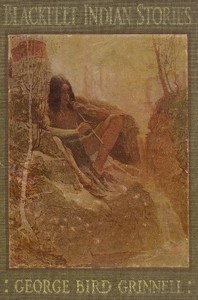
Before opening Blackfeet Indian Stories — Edition Insights, the edition data offers a quick orientation: 44,247 words, 3 hr 13 min estimated reading time, and 6 detected text sections.
The text analysis averages about 18.5 words per sentence, while the detected sections provide another way to judge how the source is divided.
Project Gutenberg metadata also associates the work with “Siksika Indians -- Folklore,” connecting these edition facts with the source record’s subject description.
Explore this collection
These alternatives are selected using recorded categories and estimated reading time.
About 194 minutes
Myths Legends
44,395 recorded words. 1 minutes difference from this book's estimate.
View Gutenberg source #8183About 168 minutes
Myths Legends
38,607 recorded words. 25 minutes difference from this book's estimate.
View Gutenberg source #13508About 138 minutes
Myths Legends
31,614 recorded words. 55 minutes difference from this book's estimate.
View Gutenberg source #3759Search stored excerpts and compare books → Choose by your preferences →
Choices use stored catalog measurements. Estimates vary with reading speed. A shared category is a catalog label, not a claim that two books have the same argument or literary quality.
Search reads excerpt text stored with this catalog and links to its associated Gutenberg record. The connection is stored in the site database; this tool does not recheck that every excerpt is word-for-word identical to that external record. Excerpt search does not cover every chapter and does not verify historical publication dates.
Catalog snapshot checked: 2026-09-26. Coverage: 91 public books, 91 available source excerpts.
Calculated from edition completeness, EPUB availability, text structure and catalogue metadata. Not a user rating.
Total of 100 points, scaled to a 2.5-5.0 range. Editions with an empty description or a missing EPUB file are not scored.
Public-domain source text
The source text is kept in the dedicated reader, separate from this catalogue record and its commentary.
George Bird Grinnell's Blackfeet Indian Stories (1915) opens with a brief note to the reader that establishes the collection's ethnographic grounding. The Blackfeet, he explains, were hunters who traveled on foot, used implements of stone, wood, or bone, and lived in hide-covered tents. Dogs were their only tame animals, used as beasts of burden. This factual preface signals that the stories are presented not as literary inventions but as records of oral tradition, passed down through generations.
The first tale, “Two Fast Runners,” immediately demonstrates Grinnell's approach: a straightforward narrative of a race between antelope and deer, with dialogue that reveals character through boast and complaint. The antelope wins on the prairie, but the deer insists on a rematch in the timber, betting their dew-claws. The story's simplicity and repetition of structure—challenge, race, dispute—are characteristic of the collection's style.
Grinnell's language is deliberately plain, avoiding literary flourish. He uses simple declarative sentences: “Once, a long time ago, the antelope and the deer happened to meet on the prairie. They spoke together, giving each other the news.” This flatness mirrors the reported nature of the tales, as if transcribed from an oral performance. The vocabulary is concrete—prairie, timber, lodges, moccasins—and rarely abstract. When describing the Blackfeet way of life, he lists material details: “implements of stone, wood, or bone,” “clothing made of skins.” This diction reinforces the sense that the stories are artifacts of a specific material culture.
In the warrior tale of Mīka´pi, the narration remains terse even during tense moments: “Mīka´pi, without noise, strung his bow, fitted an arrow to the string, and sent the thin shaft through his enemy's heart.” The adjective “thin” is a rare precise descriptor, drawing attention to the arrow's lethal slenderness. Grinnell's restraint allows the action to speak for itself.
Dialogue in these stories is functional and revealing. In “Two Fast Runners,” the deer's complaint after losing the first race shows wounded pride and cunning: “Well, it is true that out here on the prairie you have beaten me, but this is not where I live. I only come out here once in a while to feed or to cross the prairie when I am going somewhere.” The deer frames the loss as a matter of unfamiliar terrain, not inferior speed. The antelope's response—“I have beaten you out here on the flat and I can beat you there”—reveals overconfidence, a trait that often leads to downfall in folklore.
In the Mīka´pi episode, dialogue is replaced by sign language, described in careful detail. The stranger makes “the sign for paddling a canoe” to claim he is a River person, while Mīka´pi uses touch and gesture to identify the other as a Snake. This non-verbal exchange underscores the story's setting of intertribal warfare, where deception and recognition are matters of life and death. Grinnell's inclusion of the sign language description adds ethnographic texture.
The stories often follow a pattern of challenge, contest, and consequence. “Two Fast Runners” uses a double-race structure: the first race establishes a winner, the second introduces a new variable (timber) and a new bet (dew-claws). This repetition with variation is a hallmark of oral storytelling, allowing listeners to anticipate while still encountering novelty. The deer's grumbling after the first loss sets up the second race, creating a causal chain driven by character flaw.
In the Mīka´pi story, the structure is episodic: the hero travels, encounters an enemy, kills him, then receives a dream warning. The dream sequence—where he feels blood trickling from wounds—functions as a supernatural omen, a common motif. Grinnell presents it without commentary, letting the event stand as part of the narrative logic. The story then continues with more travel and a second encounter, maintaining a rhythm of action and portent.
Certain details recur across the excerpts, grounding the stories in Blackfeet material culture. Galls and dew-claws are bet in the animal race—body parts that would have been used in medicine bundles or as ornaments. The warrior Mīka´pi takes his enemy's “bow and arrows and his bundle of moccasins,” items of practical value. Moccasins appear again as a bundle, suggesting their importance as trade goods or supplies for long journeys.
The landscape is consistently specific: “the Great Place of Falling Water” is glossed as the Great Falls of the Missouri. The setting of the second Mīka´pi scene—a valley with a stream, large and small trees, and lodges “for a long distance up and down the river”—evokes a seasonal camp. These details are not decorative; they locate the stories within a known geography and seasonal round. Grinnell's footnotes and the final chapter on “The Ancient Blackfeet” reinforce this specificity, treating the tales as windows into a historical way of life.
Grinnell's Blackfeet Indian Stories rewards attention to its understated craft. The plain diction, repetitive structures, and culturally specific details are not signs of simplicity but of a deliberate ethnographic approach. Readers interested in how oral narratives encode social values and material realities will find much to examine. The final chapter on ancient Blackfeet life provides a useful companion, but the stories themselves carry the weight of the tradition.
There’s something almost unbearably tender in how Grinnell lets the old stories just sit there, unadorned, trusting the reader to hear the campfire in the plainness. It reminds me of the quieter wonder in The Book of Wonder — Themes and Context — that same willingness to let strangeness breathe without explaining it away. I keep thinking of that after closing these pages.
Answer a few questions and save a private reflection on this device.