About 193 minutes
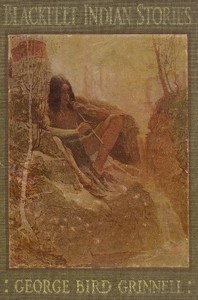
Blackfeet Indian Stories — Edition Insights
Myths Legends
44,247 recorded words. 1 minutes difference from this book's estimate.
View Gutenberg source #13833
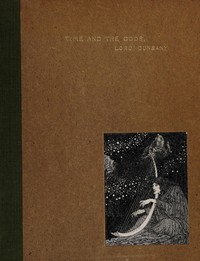
Before opening Time and the Gods — Inside the Classic, the edition data offers a quick orientation: 44,395 words, 3 hr 14 min estimated reading time, and 23 detected text sections.
The text analysis averages about 31.2 words per sentence, while the detected sections provide another way to judge how the source is divided.
Project Gutenberg metadata also associates the work with “Fantasy fiction, English,” connecting these edition facts with the source record’s subject description.
Explore this collection
These alternatives are selected using recorded categories and estimated reading time.
About 193 minutes
Myths Legends
44,247 recorded words. 1 minutes difference from this book's estimate.
View Gutenberg source #13833About 168 minutes
Myths Legends
38,607 recorded words. 26 minutes difference from this book's estimate.
View Gutenberg source #13508About 138 minutes
Myths Legends
31,614 recorded words. 56 minutes difference from this book's estimate.
View Gutenberg source #3759Search stored excerpts and compare books → Choose by your preferences →
Choices use stored catalog measurements. Estimates vary with reading speed. A shared category is a catalog label, not a claim that two books have the same argument or literary quality.
Search reads excerpt text stored with this catalog and links to its associated Gutenberg record. The connection is stored in the site database; this tool does not recheck that every excerpt is word-for-word identical to that external record. Excerpt search does not cover every chapter and does not verify historical publication dates.
Catalog snapshot checked: 2026-09-26. Coverage: 91 public books, 91 available source excerpts.
Calculated from edition completeness, EPUB availability, text structure and catalogue metadata. Not a user rating.
Total of 100 points, scaled to a 2.5-5.0 range. Editions with an empty description or a missing EPUB file are not scored.
Public-domain source text
The source text is kept in the dedicated reader, separate from this catalogue record and its commentary.
The opening tale, “Time and the Gods,” establishes a cosmology in which the gods themselves are not eternal: they are young, they sleep, they dream marble cities into existence—and they have a swarthy servant named Time who is without age. The city Sardathrion arises from their dreams, complete with onyx lions and fountains that sound like tinkling bells, yet it is hidden behind a desert of thorns, accessible only to those chosen by the gods. This framing immediately sets up a central tension: the gods create, but they are not the ultimate power; Time, their servant, is older and will outlast them.
The prose in the first tale is dense with sensory detail: marble steps, gleaming pinnacles, fountains that sound “like tinkling bells.” The gods’ dreams are not abstract—they become physical, tangible structures. Yet the narrative undercuts this creative power. The gods are described as “sleeping” while their dreams build the city, suggesting a passive, almost unconscious act of creation. More tellingly, the desert that surrounds Sardathrion is filled with thorns “all pointing towards Sardathrion,” implying that the city is a lure as much as a reward. Those who enter cannot return, for other cities become “no fitting home.” This pattern recurs throughout the excerpts: creation is beautiful but isolating, and the gods themselves are subject to forces they do not control.
In “In the Land of Time,” the new King Karnith Zo inherits a kingdom and an iron crown, but his first lesson comes from observing the ordinary life of his realm: smoke rising from houses, cocks crowing, caravans moving between Alatta and Istahn. He wonders if men do otherwise in Istahn—a moment of quiet curiosity that leads him to question war. When he visits the Temple of the gods of Old, he finds it shattered, the columns broken, and the gods forgotten. His councillors answer simply: “Time has done this.” Later, a bent old man tells him Time has “ruthlessly” done its work, and a funeral procession reveals death as a “gift” sent by the gods through their servant Time. The king’s education is not in statecraft but in the erosion of all things by an indifferent force.
Dunsany’s style juxtaposes the grandiose with the everyday. In the Sardathrion passage, the gods’ dreams produce a city of “gleaming marble” and “onyx lions,” yet the sound of fountains is compared to “tinkling bells, far off in a land of shepherds.” The mythic is anchored by a homely simile. Similarly, in the Alatta story, the king’s contemplation of war is interrupted by the sight of “smoke arising tall and straight over small houses” and “the sound of laughter” from fields. The narrative moves between the cosmic—gods dreaming, Time erasing—and the concrete: a bent man, a hearse, a caravan with tinkling bells. This oscillation prevents the tales from becoming abstract; the reader is always brought back to a physical world that is fragile and finite.
Readers should approach these tales as a sequence of variations on a theme rather than a continuous narrative. Each story re-examines the relationship between creators and what outlasts them, whether gods, kings, or dreams. Pay attention to recurring images—thorns, bells, marble, smoke—and to the way Dunsany uses simple, almost pastoral details to ground his mythic inventions. The result is a collection that feels both ancient and personal, as if the myths were being remembered rather than invented.
There are stories where gods dream the world awake, and you sense Time standing just beyond the page, patient as stone. I felt that same quiet hush reading Andreas: The Legend of St. Andrew — A Closer Reading, like watching something ancient and gentle settle over me. It lingers not as a tale told, but as a memory of grace.
Answer a few questions and save a private reflection on this device.