About 204 minutes
Folk Stories from Southern Nigeria, West Africa — Edition Insights
Folklore
46,830 recorded words. 1 minutes difference from this book's estimate.
View Gutenberg source #34655
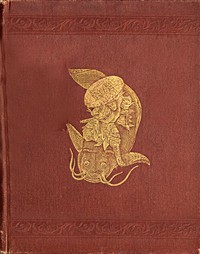
Japanese Fairy World Stories from the Wonder-Lore of Japan — Background and Themes can be approached with a clearer sense of reading commitment from its source measurements: 46,993 words, 3 hr 25 min estimated reading time, and 6 detected text sections.
The text analysis averages about 21.3 words per sentence, while the detected sections provide another way to judge how the source is divided.
Project Gutenberg metadata also associates the work with “Folklore -- Japan,” connecting these edition facts with the source record’s subject description.
Explore this collection
These alternatives are selected using recorded categories and estimated reading time.
About 204 minutes
Folklore
46,830 recorded words. 1 minutes difference from this book's estimate.
View Gutenberg source #34655About 206 minutes
Folklore
47,258 recorded words. 1 minutes difference from this book's estimate.
View Gutenberg source #55539About 207 minutes
Folklore
47,471 recorded words. 2 minutes difference from this book's estimate.
View Gutenberg source #66596Search stored excerpts and compare books → Choose by your preferences →
Choices use stored catalog measurements. Estimates vary with reading speed. A shared category is a catalog label, not a claim that two books have the same argument or literary quality.
Search reads excerpt text stored with this catalog and links to its associated Gutenberg record. The connection is stored in the site database; this tool does not recheck that every excerpt is word-for-word identical to that external record. Excerpt search does not cover every chapter and does not verify historical publication dates.
Catalog snapshot checked: 2026-09-26. Coverage: 91 public books, 91 available source excerpts.
Calculated from edition completeness, EPUB availability, text structure and catalogue metadata. Not a user rating.
Total of 100 points, scaled to a 2.5-5.0 range. Editions with an empty description or a missing EPUB file are not scored.
Public-domain source text
The source text is kept in the dedicated reader, separate from this catalogue record and its commentary.
Griffis opens his preface by stating that the thirty-four stories in this volume deliberately avoid the "bloody, revengeful or licentious elements" he found saturated in Japanese popular literature. Instead, he selects tales with an eye to the "artistic" products of the Japanese imagination. His sources are eclectic: books, professional storytellers, street floral shows, and even the tattooed limbs of native foot-runners. This framing sets expectations for a curated, genteel collection—yet the excerpt of Lord Cuttle-fish's concert reveals a very different register.
In that passage, the narrative voice shifts into a playful, almost vaudevillian mode. The queen nearly "got the hysterics" at the sight of a six-armed cuttle-fish playing three instruments at once, while a chorus of fish—tai, gudgeon, gar, frog, mackerel, fugu—behave like a comic opera. The description is precise and absurd: the cuttle-fish's "great warty speckled head, six feet high, like a huge bag upside down," and the lobster holding a candle "like the kurombo" in theatre. This tonal contrast between the preface's earnestness and the story's burlesque is the collection's defining feature.
Griffis is transparent about his editorial process. He describes his translations as "condensations of whole books, of interminable romances," and admits to taking "no more liberty" than a Tokio storyteller would in an American parlor. This is not a scholarly transcription but an adaptation for a Western audience. The preface lists sources: books, the mouths of the people, and professional storytellers at bamboo-curtained stands in Willow Street. One story he first read on tattooed limbs; another he saw in a flower tableau. This mosaic of origins gives the collection a layered texture, but it also means the reader encounters Griffis's voice as much as any Japanese original. The Lord Cuttle-fish passage, with its puns on "tortoises," "monkeys," and "livers," exemplifies his willingness to amplify the comic. The song is "made up of puns" that make "an entirely different sense" in the real words—a detail that hints at untranslatable wordplay beneath the English surface.
The extended concert scene is a set-piece of sustained absurdity. Griffis devotes several paragraphs to the antics of each fish: the "lusty red-faced tai fish" singing with gills wide open, the "little gudgeon, silent and fanning himself" after breaking down on a high note, the "long-nosed gar-fish singing alto, and proud of her slender form." The frog squats "with big bulging eyes, singing base," while the mackerel is "scandalized" and refuses to join. The fugu fish winks at a servant, and the entire right wing is "demoralized by the smell of the steaming tea." This is not a simple folktale; it is a comic tableau with a cast of characters behaving like a dysfunctional choir. The narrator's eye for detail—the "blue flat fan" of the gudgeon, the "ivory stick" for the guitar—creates a vivid, almost theatrical scene. The humor is broad but precise, relying on the reader's willingness to imagine a six-foot cuttle-fish as a one-band orchestra.
The most striking feature of this collection is the shift in register between the preface and the stories. The preface is measured, scholarly, and defensive: Griffis explains his avoidance of "bloody" elements and his focus on art. He addresses the reader as "the writer" and ends with a Japanese phrase, O agari nasai (please eat). Then, in the story, the tone becomes colloquial and comic. The queen "nearly fell down and got the hysterics," and the cuttle-fish's head is "like a huge bag upside down." The pace accelerates: the sentence describing the cuttle-fish's six arms uses a series of clauses that mimic the flurry of motion. The narrator even editorializes—"The truth must be told"—as if confiding in the reader. This inconsistency is not a flaw but a feature: Griffis is a translator and adapter who wears two hats. Readers should expect a blend of Victorian gentility and folk humor, with the latter often winning out in the tales themselves.
Because the excerpts are limited to the preface and one extended passage, the full range of the collection—from star-crossed lovers to tea-kettles—remains unseen. The Lord Cuttle-fish episode suggests that Griffis's adaptations lean into comic exaggeration and visual detail, likely drawing on Ozawa's illustrations. Readers should approach the book as a hybrid: a Victorian collector's curated selection, filtered through a storyteller's ear for the absurd. The preface's promise of harmless amusement is kept, but the amusement is often more raucous than the preface lets on.
I found myself slowing down over Griffis’s preface, his quiet admission that he gathered tales from tattooed skin and teahouse voices. That patient, hand-collected feeling carried me to an old shelf, where The Magic of the Horse-shoe, with other folk-lore notes — A Reader’s Guide sat waiting. Both seem to whisper that charm lives in small, ordinary places.
A brief reflection can help important ideas stay with you longer.









