About 205 minutes
Japanese Fairy World Stories from the Wonder-Lore of Japan — Background and Themes
Folklore
46,993 recorded words. 1 minutes difference from this book's estimate.
View Gutenberg source #29337
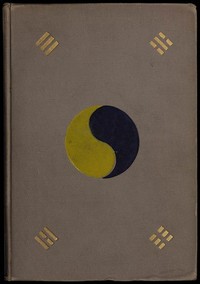
Korean Tales Being a collection of stories translated from the Korean folk lore, together with introductory chapters descriptive of Korea — A Closer Reading can be approached with a clearer sense of reading commitment from its source measurements: 47,258 words, 3 hr 26 min estimated reading time, and 11 detected text sections.
The text analysis averages about 25.2 words per sentence, while the detected sections provide another way to judge how the source is divided.
Project Gutenberg metadata also associates the work with “Korea -- Description and travel,” connecting these edition facts with the source record’s subject description.
Explore this collection
These alternatives are selected using recorded categories and estimated reading time.
About 205 minutes
Folklore
46,993 recorded words. 1 minutes difference from this book's estimate.
View Gutenberg source #29337About 207 minutes
Folklore
47,471 recorded words. 1 minutes difference from this book's estimate.
View Gutenberg source #66596About 204 minutes
Folklore
46,830 recorded words. 2 minutes difference from this book's estimate.
View Gutenberg source #34655Search stored excerpts and compare books → Choose by your preferences →
Choices use stored catalog measurements. Estimates vary with reading speed. A shared category is a catalog label, not a claim that two books have the same argument or literary quality.
Search reads excerpt text stored with this catalog and links to its associated Gutenberg record. The connection is stored in the site database; this tool does not recheck that every excerpt is word-for-word identical to that external record. Excerpt search does not cover every chapter and does not verify historical publication dates.
Catalog snapshot checked: 2026-09-26. Coverage: 91 public books, 91 available source excerpts.
Calculated from edition completeness, EPUB availability, text structure and catalogue metadata. Not a user rating.
Total of 100 points, scaled to a 2.5-5.0 range. Editions with an empty description or a missing EPUB file are not scored.
Public-domain source text
The source text is kept in the dedicated reader, separate from this catalogue record and its commentary.
Horace N. Allen's Korean Tales (1889) opens not with a story but with two descriptive chapters on Korea's country, people, and capital. This framing suggests the translator's dual purpose: to entertain and to correct misconceptions about a nation then little known to American readers. The tales themselves, drawn from oral tradition, share a structural pattern that becomes evident across the excerpts: a humble protagonist receives a supernatural gift—often delivered by a bird—while a greedy counterpart attempts to replicate the fortune and meets with comic or disastrous results.
Birds appear repeatedly as agents of justice. In the excerpt from “Hyung Bo and Nahl Bo,” a swallow with a broken leg is nursed back to health by the kind brother, Hyung Bo. The bird later returns with a seed that grows into a gourd filled with riches. The wicked brother, Nahl Bo, hearing this story, deliberately breaks a swallow's legs and binds them in splints, hoping for the same reward. The bird, however, reports the cruelty to the bird king, who gives it a seed that produces gourds filled not with treasure but with rope-dancers who demand payment. The narrative thus uses the bird's perspective to distinguish genuine kindness from calculated imitation.
The gourd is a central image in the excerpted tale, functioning as a vessel for both reward and punishment. Hyung Bo's single gourd yields riches; Nahl Bo's twelve gourds produce a troupe of performers who refuse to leave until paid. The physical description of the gourds emphasizes their size and weight: “the great beams of his house fairly groaned under their weight,” and lowering them requires “ropes and poles” and “the yelling of a score of coolies.” This exaggeration turns the expected treasure into a logistical nuisance, and the gourd's contents shift from valuable to absurd. The image recurs in the story's structure: the same object that brings prosperity to one character brings chaos to another.
Allen's tales often begin in a recognizable domestic setting—a court, a veranda, a room with paper windows—before moving into a realm of magical cause and effect. In the excerpt, Nahl Bo sits “cross-legged in the little room opening on the veranda off his court” when he hears the bird's song. He “threw open the paper windows” to find the creature. The transition from ordinary life to supernatural event is abrupt and unmarked by any shift in tone. Similarly, the gourd's contents emerge into the same courtyard where the family watches, blurring the line between everyday reality and folkloric wonder. This structural movement suggests that the marvelous is always adjacent to the mundane in the Korean worldview Allen sought to present.
The excerpt from “Hyung Bo and Nahl Bo” relies on a pattern of repetition with variation: a good brother receives a reward; a bad brother tries to copy the method and fails. The same sequence—bird injury, nursing, seed, gourd—unfolds twice, but the outcomes diverge. This structure is common in folktales, and Allen's translation preserves it clearly. The wicked brother's attempt is described in greater detail, with added complications: the vines damage the roof, the gourds require guards, and the carpenter charges an exorbitant fee. The repetition allows the reader to compare the two brothers' motivations and fates, reinforcing the moral without explicit commentary.
Allen's collection offers a window into Korean narrative conventions at a time when Western readers had little access to them. The tales reward attention to repeated motifs—birds, gourds, broken objects—and to the way each story moves from a concrete, often domestic starting point into a world where justice is delivered through tangible objects. Readers may find it useful to compare the introductory chapters with the tales themselves, noting how Allen's descriptions of Korean life resonate with the details that appear in the stories.
I found myself lingering over the gourds in Korean Tales, their quiet presence in so many stories. That humbling domesticity, the way small broken objects carried meaning, reminded me of the Ikom folk stories from Southern Nigeria — Reading Notes. Both worlds seemed to whisper that the ordinary holds the supernatural, if only we listen long enough.
Build a private reading journal entry for this title.









