About 170 minutes
Czech Folk Tales — Themes and Context
Folklore
38,973 recorded words. 14 minutes difference from this book's estimate.
View Gutenberg source #52596
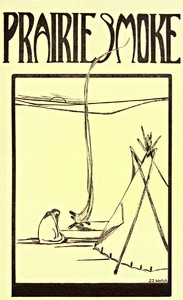
For Prairie Smoke, a Collection of Lore of the Prairies — Context and Discussion, the stored edition analysis reports 42,255 words, 3 hr 4 min estimated reading time, and 5 detected text sections.
The text analysis averages about 23.5 words per sentence, while the detected sections provide another way to judge how the source is divided.
Project Gutenberg metadata also associates the work with “Indians of North America -- Folklore,” connecting these edition facts with the source record’s subject description.
Explore this collection
These alternatives are selected using recorded categories and estimated reading time.
About 170 minutes
Folklore
38,973 recorded words. 14 minutes difference from this book's estimate.
View Gutenberg source #52596About 202 minutes
Folklore
46,237 recorded words. 18 minutes difference from this book's estimate.
View Gutenberg source #74064About 204 minutes
Folklore
46,830 recorded words. 20 minutes difference from this book's estimate.
View Gutenberg source #34655Search stored excerpts and compare books → Choose by your preferences →
Choices use stored catalog measurements. Estimates vary with reading speed. A shared category is a catalog label, not a claim that two books have the same argument or literary quality.
Search reads excerpt text stored with this catalog and links to its associated Gutenberg record. The connection is stored in the site database; this tool does not recheck that every excerpt is word-for-word identical to that external record. Excerpt search does not cover every chapter and does not verify historical publication dates.
Catalog snapshot checked: 2026-09-26. Coverage: 91 public books, 91 available source excerpts.
Calculated from edition completeness, EPUB availability, text structure and catalogue metadata. Not a user rating.
Total of 100 points, scaled to a 2.5-5.0 range. Editions with an empty description or a missing EPUB file are not scored.
Public-domain source text
The source text is kept in the dedicated reader, separate from this catalogue record and its commentary.
The opening pages of Prairie Smoke immediately establish a dual purpose: to document the lore of Plains tribes and to convey the philosophical weight these peoples placed on the natural world. Gilmore begins not with a story but with a detailed map and linguistic classification of North Dakota's native nations—Algonkian, Siouan, and Caddoan—before moving into a meditation on three tree species. The cottonwood, he explains, was a symbol of fidelity among the Dakota, its rustling leaves interpreted as secret messages carried by winds, agents of the Higher Powers. This blend of ethnographic precision and poetic interpretation sets the tone for the entire volume.
The book's front matter includes a map showing the distribution of tribes such as the Dakota, Chippewa, Mandan, Hidatsa, and Arikara, with cross-hatching to indicate alliances. Gilmore then devotes several pages to the cottonwood, the pasque flower, and other species before presenting any narrative. This structure suggests that the lore that follows is meant to be understood within a specific cultural geography. Readers should note that Gilmore does not simply collect tales; he interprets them through the lens of Dakota ethics, noting that the cottonwood symbolized fidelity, one of four great virtues. The pasque flower, he writes, has a song that is "the expression of the life or soul of the species." These framing passages are essential for grasping the worldview behind the stories.
Gilmore details the cottonwood's prominence in ritual life. The Sacred Pole of the Omaha nation was made of cottonwood, an object of veneration comparable to the Ark of the Covenant. The central tree of the Dakota Sun Dance—their most momentous religious ritual—had to be a cottonwood with a trunk at least two spans in circumference and forked at a height about four times the outstretched arms. Twigs and bark were burned as incense to ward off Anog Ite, a malevolent being who foments scandals and infidelity. These specifics ground the lore in material practice: the tree was not merely symbolic but physically central to ceremonies. Gilmore's attention to such details allows readers to see how belief and action intertwined.
In a section titled "The Song of the Pasque Flower," Gilmore presents a Dakota folk story about the earliest spring bloom. The flowers once greeted passersby with cheerful "Good morning!" but, ignored, became bashful and now turn their heads aside while still offering kind greetings. This tale exemplifies the personification of nature common in the collection. Gilmore also notes that the pasque flower's range extends from latitude 43° north to the Great Slave Lake, and that it is closely related to the anemone, sometimes called wind flower. The song of the pasque flower, he says, is translated from the Dakota language, though the excerpt does not include the song itself. Readers should expect that many entries will blend natural history with narrative.
The excerpts provided cover only the opening portion of Prairie Smoke, focusing on trees and flowers. The full work likely contains many more entries on animals, celestial bodies, and other natural phenomena, each treated with similar care. Gilmore's method is consistent: he identifies a species, explains its cultural significance, and then offers a story or song. Readers should approach each entry as a self-contained unit that nonetheless contributes to a larger mosaic of Plains Indian philosophy. The absence of a single narrative arc means the book can be read in any order, but the introductory material on tribal distribution and ethics is crucial for context. Gilmore's voice is that of a sympathetic outsider, documenting traditions he clearly respects.
As you read Prairie Smoke, pay attention to how Gilmore moves between natural description and cultural interpretation. The cottonwood and pasque flower entries demonstrate his pattern: first, a botanical or geographical note; then, an explanation of the plant's role in ritual or story; finally, a translated narrative. This structure makes the book both a reference work and a collection of literature. The lore is best appreciated when read slowly, with an eye for the recurring themes of reverence, communication with the natural world, and the ethical code that binds them together.
Sometimes a place stays with you through its smallest voices—Gilmore’s prairie lore made me feel the quiet weight of a single flower’s story. That same hush lives in the Borneo collection, where trees and rivers hold their own remembered songs. It lingers, soft as smoke, Folk-lore in Borneo — Text and Context, like a friend’s old photograph.
Answer a few questions and save a private reflection on this device.









