About 390 minutes
Where Animals Talk: West African Folk Lore Tales — Key Ideas to Explore
Folklore
89,629 recorded words. 2 minutes difference from this book's estimate.
View Gutenberg source #58900
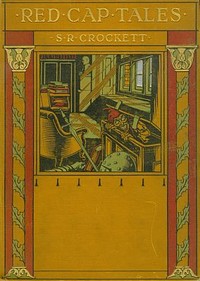
Red Cap Tales, Stolen from the Treasure Chest of the Wizard of the North — Background and Themes can be approached with a clearer sense of reading commitment from its source measurements: 90,115 words, 6 hr 32 min estimated reading time, and 12 detected text sections.
The text analysis averages about 20.3 words per sentence, while the detected sections provide another way to judge how the source is divided.
Project Gutenberg metadata also associates the work with “Scott, Walter, 1771-1832 -- Adaptations,” connecting these edition facts with the source record’s subject description.
Explore this collection
These alternatives are selected using recorded categories and estimated reading time.
About 390 minutes
Folklore
89,629 recorded words. 2 minutes difference from this book's estimate.
View Gutenberg source #58900About 383 minutes
Folklore
88,007 recorded words. 9 minutes difference from this book's estimate.
View Gutenberg source #60782About 376 minutes
Folklore
86,465 recorded words. 16 minutes difference from this book's estimate.
View Gutenberg source #61730Search stored excerpts and compare books → Choose by your preferences →
Choices use stored catalog measurements. Estimates vary with reading speed. A shared category is a catalog label, not a claim that two books have the same argument or literary quality.
Search reads excerpt text stored with this catalog and links to its associated Gutenberg record. The connection is stored in the site database; this tool does not recheck that every excerpt is word-for-word identical to that external record. Excerpt search does not cover every chapter and does not verify historical publication dates.
Catalog snapshot checked: 2026-09-26. Coverage: 91 public books, 91 available source excerpts.
Calculated from edition completeness, EPUB availability, text structure and catalogue metadata. Not a user rating.
Total of 100 points, scaled to a 2.5-5.0 range. Editions with an empty description or a missing EPUB file are not scored.
Public-domain source text
The source text is kept in the dedicated reader, separate from this catalogue record and its commentary.
Red Cap Tales opens not with a story but with a problem: four children refuse to read Walter Scott. S. R. Crockett, writing in 1904, presents his retellings as a lure, comparing himself to someone dangling carrots before a reluctant donkey. The book's structure is immediately unusual—it alternates between adapted tales from Waverley and Guy Mannering and interludes showing how Sweetheart, Hugh John, Sir Toady Lion, and Maid Margaret receive these “petty larcenies from the full chest of the Wizard.” This framing device turns the reading experience into a layered one: we watch children become captivated by Scott, even as we read the stories ourselves.
Crockett’s editorial note explains that the children initially found Waverley impenetrable—“stuck upon the very threshold.” His solution was to tell the stories orally, then add interludes that dramatize the children’s reactions. The result is a book that constantly shifts between two registers: the historical romance of Scott and the domestic comedy of the nursery. In the first interlude, for instance, the children interrupt the tale of Waverley-Honour to argue about heroes. This movement between scenes—from the Baron of Bradwardine’s hall to a child’s question about courage—creates a rhythm that keeps both the old story and the new audience in view.
Two images recur in the excerpt from the Waverley adaptation: a small but heavy portmanteau and a young woman in a man’s coat and hat. The portmanteau belongs to a nervous officer named Morris, who clings to it “desperately” and never parts from it. Frank Osbaldistone teases him by offering to carry it, and the bag becomes a comic emblem of misplaced fear. Later, the riding-habit—the first Frank has ever seen—marks Diana Vernon as striking and unconventional. Crockett emphasizes her “singular beauty” in a “savage scene,” and her banter with a huntsman about the fox’s death shows her as quick and competitive. These objects are not merely props; they signal character and tension.
The interludes are not afterthoughts. They are titled with playful phrases like “The First Interlude of Action” and “Interlude of Sticking-Plaster,” and they serve as bridges between the adapted tales. In them, the children debate the heroes’ choices, ask for more stories, and even reenact scenes. Crockett uses these moments to acknowledge the artificiality of his project—he is, after all, stealing from Scott’s “treasure chest.” But the interludes also mirror the reader’s own engagement: we, too, are being lured into Scott. The structure suggests that storytelling is a collaborative act, passed from teller to listener, with interruptions and questions as part of the process.
Crockett’s adaptation of Waverley moves swiftly from the North Road to Osbaldistone Hall. The journey is marked by encounters: a cowardly officer, a Scottish drover named Campbell who casually admits to beating off highwaymen, and a landlord who introduces the characters. The landscape shifts from the “commonplace and dull” road to the “great rounded range of the Cheviot Hills,” and finally to the hall “stark and grey, among its ancestral oaks.” This progression is cinematic in its pacing. Crockett condenses Scott’s descriptive passages but retains the sense of movement—physical and social—that propels the hero into a new world.
Because the excerpts cover only the beginning of the Waverley adaptation and a fragment of Guy Mannering, the full arc of Crockett’s retellings remains unclear. Readers should expect the interludes to continue shaping the experience, with the children’s voices periodically breaking into the narrative. The book rewards attention to its frame: the way it balances Scott’s plots with the domestic drama of reluctant readers becoming enthusiasts.
I found myself thinking of Red Cap Tales the other day, how the children there gather around stories and make them their own. It reminded me, strangely, of the trickster tales I once heard told aloud. That same playful shifting, where a story bends and changes with the listener’s temper. It’s a different voice, but the same old companionship. Jamaica Anansi stories — A Reader’s Guide holds that feeling for me, like a familiar chair in a quiet room.
Use these questions to collect your thoughts before moving on.









