About 213 minutes
Kaffir folk-lore — Background and Themes
Folklore
48,888 recorded words. 2 minutes difference from this book's estimate.
View Gutenberg source #71335
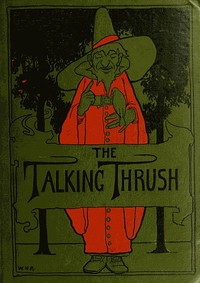
This digital edition of The Talking Thrush, and Other Tales from India — Reading Notes is described by source-level measurements including 49,254 words, 3 hr 35 min estimated reading time, and 8 detected text sections.
The text analysis averages about 17.7 words per sentence, while the detected sections provide another way to judge how the source is divided.
Project Gutenberg metadata also associates the work with “Folklore -- India,” connecting these edition facts with the source record’s subject description.
Explore this collection
These alternatives are selected using recorded categories and estimated reading time.
About 213 minutes
Folklore
48,888 recorded words. 2 minutes difference from this book's estimate.
View Gutenberg source #71335About 207 minutes
Folklore
47,471 recorded words. 8 minutes difference from this book's estimate.
View Gutenberg source #66596About 206 minutes
Folklore
47,258 recorded words. 9 minutes difference from this book's estimate.
View Gutenberg source #55539Search stored excerpts and compare books → Choose by your preferences →
Choices use stored catalog measurements. Estimates vary with reading speed. A shared category is a catalog label, not a claim that two books have the same argument or literary quality.
Search reads excerpt text stored with this catalog and links to its associated Gutenberg record. The connection is stored in the site database; this tool does not recheck that every excerpt is word-for-word identical to that external record. Excerpt search does not cover every chapter and does not verify historical publication dates.
Catalog snapshot checked: 2026-09-26. Coverage: 91 public books, 91 available source excerpts.
Calculated from edition completeness, EPUB availability, text structure and catalogue metadata. Not a user rating.
Total of 100 points, scaled to a 2.5-5.0 range. Editions with an empty description or a missing EPUB file are not scored.
Public-domain source text
The source text is kept in the dedicated reader, separate from this catalogue record and its commentary.
The tales in this collection, drawn from William Crooke's ethnological surveys and retold by W. H. D. Rouse, show a deliberate simplicity in diction that mirrors oral storytelling. The narrators often use direct, unadorned sentences such as 'The Blackbird used to sing very sweetly' and 'He determined to get her back, by hook or by crook.' Dialogue is sparse but functional, advancing the plot without ornament. The stories rely on repetitive structures—characters meet, ask 'Whither away?', and receive the same answer—which creates a rhythmic, chant-like quality. This editorial note examines how these choices shape the tales' tone and accessibility.
In 'The Valiant Blackbird,' the hero meets a series of animals—a Cat, Ants, a Rope, a Club, and a River—each time asking 'Whither away, Mr. Blackbird?' and receiving the reply 'To fight against the King.' Each new ally then 'jump[s] into my ear' of the Blackbird. This pattern is not merely formulaic; it builds suspense through accumulation. The repetition of the question and answer, along with the identical instruction to jump into the ear, creates a predictable rhythm that young readers can follow easily. The same technique appears in 'The King of the Mice,' where the Mouse King's letter and the Woodcutter Chief's sneeze are prepared through a series of burrowing actions. The repeated phrase 'Night and day they burrowed under the earth' emphasizes the mice's relentless labor. This structural repetition is a hallmark of oral tradition, allowing the listener to anticipate and participate in the story's progression.
Dialogue in these tales is terse and purposeful. In 'The Valiant Blackbird,' the exchanges between the Blackbird and each potential ally consist of exactly three lines: a question, a declaration of purpose, and an offer to join. No character wastes words on description or emotion. The Cat says simply, 'he drowned my kitten,' and the Ants say, 'he poured hot water down our hole.' These brief grievances provide motivation without backstory. Similarly, in 'The King of the Mice,' the Woodcutter Chief's response to the Mouse King's letter is limited to 'Let them come' and a laugh. The snuff packet hidden in the letter is a clever narrative device that triggers the climax through a sneeze—a physical reaction rather than a verbal one. The dialogue thus serves as a springboard for action, not a vehicle for character development.
The descriptions are minimal, focusing on essential details. In 'The Valiant Blackbird,' the hero's armor is improvised from natural objects: 'a long sharp thorn' tied at his waist, 'the half of a walnut-shell for a helmet,' and 'the skin of a dead frog served for body-armour.' These items are named without elaboration, yet they evoke a vivid image of a tiny warrior. The setting is equally sparse: the Blackbird lives 'on a tree,' the King's palace is 'not far,' and the River is simply 'a River.' In 'The King of the Mice,' the treasury has 'stone walls' but the mice enter 'through the floor, where no danger was expected.' The village is reduced to 'a thin shell of earth' before collapsing. This economy of description forces the reader to focus on the action and the cleverness of the protagonists, rather than on extraneous scenery.
The narrator maintains a consistent, slightly formal tone that blends folk-tale conventions with a gentle didacticism. Phrases like 'Thus it happened' and 'Now was the time to strike the blow' signal turning points. The narrator occasionally interjects with mild humor, as when the Woodcutter Chief's sneeze is described as 'Tishoo! Tishoo!'—an onomatopoeic touch that lightens the moment. The preface notes that the tales were 'retold' for children, and the narrator's voice reflects this aim: it is clear, direct, and avoids moralizing. The stories end with a resolution that restores order, such as 'no one ever molested Mouseland again.' This narrative stance respects the intelligence of young readers while preserving the authenticity of the source material. The absence of overt commentary on the tales' meanings allows the actions and outcomes to speak for themselves.
Readers attentive to the authorial choices in these tales will notice how the spare diction and repetitive structures create a distinctive rhythm that echoes oral performance. The dialogue, though brief, efficiently motivates the plot, while the descriptions focus on functional details that support the action. These elements together produce stories that are both accessible and memorable, inviting readers to engage with the narratives as they might have been told aloud.
There’s a particular hush in Crooke and Rouse’s retellings, a careful listening to how the animals speak. It reminds me of the quieter patience found in another old collection, Outa Karel's Stories: South African Folk-Lore Tales — Reading Companion, where the same unhurried warmth lingers. I find myself missing that gentleness in newer books.
Use these questions to collect your thoughts before moving on.









