About 110 minutes
Tales of Giants from Brazil — Text and Context
Fairy Tales
25,288 recorded words. 2 minutes difference from this book's estimate.
View Gutenberg source #21678
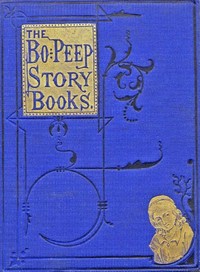
The source record for Bo-Peep Story Books — A Closer Reading measures this digital text at 24,723 words, 1 hr 48 min estimated reading time, and 4 detected text sections.
The text analysis averages about 25.5 words per sentence, while the detected sections provide another way to judge how the source is divided.
Project Gutenberg metadata also associates the work with “Fairy tales,” connecting these edition facts with the source record’s subject description.
Explore this collection
These alternatives are selected using recorded categories and estimated reading time.
About 110 minutes
Fairy Tales
25,288 recorded words. 2 minutes difference from this book's estimate.
View Gutenberg source #21678About 115 minutes
Fairy Tales
26,450 recorded words. 7 minutes difference from this book's estimate.
View Gutenberg source #27321About 51 minutes
Fairy Tales
11,599 recorded words. 57 minutes difference from this book's estimate.
View Gutenberg source #72332Search stored excerpts and compare books → Choose by your preferences →
Choices use stored catalog measurements. Estimates vary with reading speed. A shared category is a catalog label, not a claim that two books have the same argument or literary quality.
Search reads excerpt text stored with this catalog and links to its associated Gutenberg record. The connection is stored in the site database; this tool does not recheck that every excerpt is word-for-word identical to that external record. Excerpt search does not cover every chapter and does not verify historical publication dates.
Catalog snapshot checked: 2026-09-26. Coverage: 91 public books, 91 available source excerpts.
Calculated from edition completeness, EPUB availability, text structure and catalogue metadata. Not a user rating.
Total of 100 points, scaled to a 2.5-5.0 range. Editions with an empty description or a missing EPUB file are not scored.
Public-domain source text
The source text is kept in the dedicated reader, separate from this catalogue record and its commentary.
Clara de Chatelain's Bo-Peep Story Books (c. 1860s) gathers fourteen fairy tales and nursery rhymes under a single illustrated cover. The collection's title, drawn from the final tale, suggests a child-oriented miscellany, yet the editorial hand is unmistakable: each story is "Edited by Madame de Chatelain," and the prose bears the mark of Victorian literary refinement. The volume opens with Cinderella and closes with the cumulative rhyme "The House that Jack Built" and the morbid "Death & Burial of Cock Robin," a juxtaposition that hints at the range of tones within. This note attends to the collection's structural patterns, recurring images of domestic space and transformation, and the way movement between scenes—from hearth to ballroom, from waking to enchanted sleep—shapes the reader's experience.
The tales in this collection repeatedly stage movement across thresholds—from poverty to splendor, from waking to sleep, from isolation to community. In "Cinderella," the protagonist's shift from the chimney corner to the prince's ball is mediated by the fairy godmother's transformation of a pumpkin into a carriage, a sequence that emphasizes the abruptness of magical change. Similarly, "The Sleeping Beauty in the Wood" lingers on the prince's passage through the enchanted castle: he crosses a court paved with marble, a guard-room of snoring soldiers, and several chambers of sleeping courtiers before reaching the princess. The narrative dwells on these intermediate spaces, creating a sense of gradual penetration into the heart of the enchantment. This structural pattern—a journey through layered barriers—recurs in "The Fair One with Golden Locks," where the hero must overcome obstacles (a dragon, a lion) to reach the princess. The collection thus uses physical movement as a metaphor for narrative progression, with each threshold crossed marking a step toward resolution.
Domestic work is not merely background detail but a driving force in several tales. In "Cinderella," the heroine's labor—washing dishes, scrubbing stairs, starching ruffles—is described with specificity that grounds the fantasy in tangible routine. The stepmother "compelled the poor girl to do all the drudgery of the household," and the narrative enumerates tasks: "she washed the dishes, and scrubbed down the stairs, and polished the floors." This catalog of chores establishes Cinderella's virtue through her endurance of menial work. In "Little Red Riding Hood," domestic errands (taking cakes and butter to grandmother) set the plot in motion. Even in "Beauty and the Beast," the heroine's willingness to perform household tasks in the Beast's castle signals her adaptability and goodness. The collection consistently aligns moral worth with domestic competence, a theme that would resonate with Victorian readers. Notably, the fairy godmother's magic does not eliminate labor but rather enables Cinderella to transcend her domestic role temporarily, reinforcing the idea that work is a constant, even in enchanted worlds.
Mirrors and windows appear as charged objects across the tales. In "Cinderella," the sisters' rooms are "furnished with full-length looking-glasses," tools of vanity that contrast with Cinderella's lack of such luxuries. The prince's palace in "Sleeping Beauty" includes a "hall of looking-glasses" where the newlyweds sup, a space that reflects and multiplies the couple's image, emphasizing spectacle and self-regard. Windows serve as thresholds for observation: in "Little Red Riding Hood," the wolf watches the girl through the window; in "The Fair One with Golden Locks," the princess is often seen at her window, her golden hair visible from afar. These framing devices draw attention to the act of looking—by characters, by narrators, and by readers. The collection's illustrations (not included in this text) would have further emphasized visual spectacle. The repeated use of reflective surfaces and apertures suggests a self-consciousness about storytelling as a visual medium, where seeing and being seen drive both plot and moral judgment.
"The Sleeping Beauty in the Wood" offers the collection's most explicit manipulation of time. The princess sleeps for a century, and upon waking, she and the prince talk "for about four hours, without having said half of what they had to say." The narrator wryly notes that the princess had "ample time—namely, a century—to consider what she should say," and that the fairy likely gave her "agreeable dreams." This playful treatment of temporal suspension contrasts with the linear urgency of other tales. In "Cinderella," the ball's midnight deadline creates a countdown; in "Little Red Riding Hood," the wolf's deception unfolds in real time. The collection thus juxtaposes different temporal regimes: enchanted stasis versus hurried mortal time. The Sleeping Beauty's court, frozen in a moment, resumes with outdated fashions and music "at least a century out of date," a detail that gently mocks the idea of timeless romance. This awareness of historical change—the ruff, the old tunes—anchors the fairy tale in a specific Victorian sensibility, acknowledging that even enchantment ages.
Readers approaching Bo-Peep Story Books may find it useful to attend to the editorial voice: Chatelain's additions—such as the ironic aside about the princess's century of preparation—shape the tales' tone. The collection's structure, moving from longer stories to shorter rhymes, creates a decelerating rhythm that rewards reading in sequence. Consider how each tale handles the boundary between the ordinary and the magical: some cross it abruptly, others linger on the threshold. The recurring motifs of labor, reflection, and suspended time offer a coherent lens through which to view these familiar stories, revealing the craft beneath the enchantment.
Reading about Chatelain’s fairy tales, I kept thinking how enchantment hides inside everyday chores—the turning of a spindle, the sweeping of a hearth. It reminded me of that quiet feeling I got from Tales of Giants from Brazil — Text and Context, where the wildest stories still root themselves in the simple textures of home. Both linger that way, softly.
Capture what you thought, learned, and would like to remember.