About 207 minutes
Edmund Dulac's Picture-Book for the French Red Cross — Story, Setting & Ideas
Fairy Tales
47,513 recorded words. 7 minutes difference from this book's estimate.
View Gutenberg source #45907
The catalog record for The Blue Rose Fairy Book — Themes and Context provides practical reading context through 45,793 words, 3 hr 20 min estimated reading time, and 7 detected text sections.
The text analysis averages about 23.6 words per sentence, while the detected sections provide another way to judge how the source is divided.
Project Gutenberg metadata also associates the work with “Fairy tales,” connecting these edition facts with the source record’s subject description.
Explore this collection
These alternatives are selected using recorded categories and estimated reading time.
About 207 minutes
Fairy Tales
47,513 recorded words. 7 minutes difference from this book's estimate.
View Gutenberg source #45907About 228 minutes
Fairy Tales
52,399 recorded words. 28 minutes difference from this book's estimate.
View Gutenberg source #73256About 235 minutes
Fairy Tales
53,948 recorded words. 35 minutes difference from this book's estimate.
View Gutenberg source #37193Search stored excerpts and compare books → Choose by your preferences →
Choices use stored catalog measurements. Estimates vary with reading speed. A shared category is a catalog label, not a claim that two books have the same argument or literary quality.
Search reads excerpt text stored with this catalog and links to its associated Gutenberg record. The connection is stored in the site database; this tool does not recheck that every excerpt is word-for-word identical to that external record. Excerpt search does not cover every chapter and does not verify historical publication dates.
Catalog snapshot checked: 2026-09-26. Coverage: 91 public books, 91 available source excerpts.
Calculated from edition completeness, EPUB availability, text structure and catalogue metadata. Not a user rating.
Total of 100 points, scaled to a 2.5-5.0 range. Editions with an empty description or a missing EPUB file are not scored.
Public-domain source text
The source text is kept in the dedicated reader, separate from this catalogue record and its commentary.
Maurice Baring's The Blue Rose Fairy Book (1911) opens with a gipsy's curse that Princess Rainbow must never see the Spring—a premise that immediately signals the author's willingness to twist fairy-tale conventions. Baring's diction is precise and often playful: the beadle who bars the gipsy from the cathedral, the King and Queen's literal-minded solution, and the princess's name itself all suggest a world where language carries weight. The collection's twelve stories, some previously published in periodicals, share a consistent narrative voice that balances formal storytelling with colloquial asides, creating a tone that is both authoritative and intimate.
Baring's word choices often defamiliarize standard fairy-tale elements. In "The Glass Mender," the princess is named Rainbow, and the curse hinges on a seasonal concept rather than a spindle or apple. The gipsy's prophecy is delivered in direct, unadorned speech: "Your daughter will be very beautiful, and as happy as the day is long, until she sees the Spring!" The King and Queen's response—"Rainbow must never see the Spring, nor even hear that there is such a thing"—shows a bureaucratic literalism that undercuts the magical threat. Elsewhere, characters are named Heartsease, Simple Simon, and Lieblich Gedacht, blending English and German registers. These names are not arbitrary; they function as compressed character sketches, and Baring often lets them carry the narrative weight of description.
Dialogue in these tales is spare but pointed, advancing both character and conflict. In the excerpt from "The Vagabond," the wicked Queen dismisses the nurse's recognition of Heartsease with a single line: "she must be locked up in the dungeon at once for telling lies." The King's daughters are summoned and fail to recognize their sister because "she was not allowed to speak"—a detail that highlights the power of speech and its suppression. The vagabond's final request to sing a song before death is granted, and his song "of the love that never dies" breaks the Queen's spell. Baring uses dialogue to show how authority figures control truth: the Queen declares the vagabond a wizard and Heartsease a witch, and "owing to her magic everybody believed this." The spoken word, whether curse, command, or song, is the primary engine of transformation.
Baring's plots often follow familiar fairy-tale arcs—a quest, a curse, a recognition scene—but he subverts them with unexpected turns. In "The Glass Mender," the princess is hidden from Spring, but the story does not end with a simple avoidance; the curse's fulfillment is deferred and complicated. The vagabond's song, rather than a sword or a kiss, is the instrument of salvation. The recognition scene in "The Vagabond" is particularly telling: Simple Simon, the fool, is the only one who sees no change in Heartsease, while the Court laughs at him. Baring inverts the usual hierarchy of perception, suggesting that wisdom resides in the simple. The structure of the collection itself—twelve stories, some very short—allows Baring to experiment with pacing, from the leisurely "The Glass Mender" to the compressed "The Ring."
Several motifs recur across the collection: musical performance as a transformative act, the power of names, and the failure of authority figures. The vagabond's song in "The Vagabond" echoes the minstrel's art in "The Minstrel" and the organist's disappearance into the manuals in "The Story of Vox Angelica and Lieblich Gedacht." Music is consistently depicted as a force that can break spells, reveal truth, or transport listeners. Names like Heartsease and Rainbow are not merely decorative; they encode the characters' fates or qualities. Kings and queens are often ineffectual or easily deceived—the King in "The Vagabond" cannot recognize his own daughter, and the Queen's magic controls perception. These recurring details create a cohesive world where the marginal figures—the vagabond, the fool, the child—hold the keys to resolution.
Readers approaching The Blue Rose Fairy Book will find stories that reward attention to language and structure. Baring's authorial choices—his precise diction, his use of dialogue to reveal character, his structural inversions—make these tales more than simple retellings. The collection is best read not as a single narrative but as a series of variations on a theme, each story offering a different angle on the relationship between words, power, and transformation. The brevity of many tales invites rereading, and the consistent voice across them creates a unified reading experience.
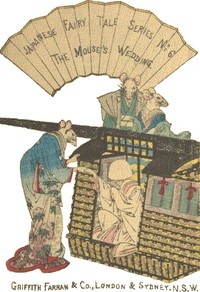
There’s a particular quietness in Baring’s fairy tales, that wry, gentle tug at convention that feels like an old friend’s nod. Reading him, I find myself remembering how small stories hold large absences. The same tender, unsentimental ache seems to linger around The Mouse’s Wedding, and I keep returning to that one, like a familiar path. The Mouse’s Wedding — Story, Setting & Ideas stays with me, a soft echo of that same voice.
Save your reaction, strongest insight, and memorable passage.