About 31 minutes
Daffydowndilly and the Golden Touch — Text and Context
Fairy Tales
7,080 recorded words. 4 minutes difference from this book's estimate.
View Gutenberg source #66372
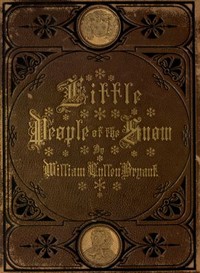
Before opening The Little People of the Snow — Key Ideas to Explore, the edition data offers a quick orientation: 5,991 words, 27 min estimated reading time, and 1 detected text section.
The text analysis averages about 25.8 words per sentence, while the detected sections provide another way to judge how the source is divided.
Project Gutenberg metadata also associates the work with “Fairy tales,” connecting these edition facts with the source record’s subject description.
Explore this collection
These alternatives are selected using recorded categories and estimated reading time.
About 31 minutes
Fairy Tales
7,080 recorded words. 4 minutes difference from this book's estimate.
View Gutenberg source #66372About 16 minutes
Fairy Tales
3,663 recorded words. 11 minutes difference from this book's estimate.
View Gutenberg source #27456About 49 minutes
Fairy Tales
11,097 recorded words. 22 minutes difference from this book's estimate.
View Gutenberg source #25464Search stored excerpts and compare books → Choose by your preferences →
Choices use stored catalog measurements. Estimates vary with reading speed. A shared category is a catalog label, not a claim that two books have the same argument or literary quality.
Search reads excerpt text stored with this catalog and links to its associated Gutenberg record. The connection is stored in the site database; this tool does not recheck that every excerpt is word-for-word identical to that external record. Excerpt search does not cover every chapter and does not verify historical publication dates.
Catalog snapshot checked: 2026-09-26. Coverage: 91 public books, 91 available source excerpts.
Calculated from edition completeness, EPUB availability, text structure and catalogue metadata. Not a user rating.
Total of 100 points, scaled to a 2.5-5.0 range. Editions with an empty description or a missing EPUB file are not scored.
Public-domain source text
The source text is kept in the dedicated reader, separate from this catalogue record and its commentary.
William Cullen Bryant's The Little People of the Snow opens not with narration but with a framed dialogue: Alice and Willy coax their Uncle John for a story, rejecting childish tales in favor of elves, gnomes, or water-fairies. This conversational frame establishes a layered telling—Uncle John's voice mediates the fantastic, while the children's interruptions (Alice corrects Willy's age, challenges geography) keep the tale tethered to a domestic fireside. The poem itself, set in a mythic past on the slopes of Caucasus or Ararat, follows Eva, a twelve-year-old girl who befriends snow spirits. Bryant's verse shifts between the cozy frame and the stark mountain setting, where winter flowers bloom in November frost and a brook sings beneath deep snow. The tension between the warm interior and the cold exterior becomes central as Eva's bond with the Little People leads to an irreversible separation.
The poem's opening dialogue does more than introduce characters; it establishes the rules of engagement. Alice demands a tale that is not "too childish," specifying elves with "jingling reins" or "gnomes of the mine." Uncle John's response—a story of a mountain cottage and a girl named Eva—implicitly agrees to her criteria, yet the narrative that follows is neither purely whimsical nor entirely safe. The frame creates a tension between the cozy expectation of a winter fireside tale and the somber events that unfold. Bryant uses the children's voices to mirror the reader's own anticipation, while Uncle John's measured tone hints at gravity. The interruptions (Alice correcting Willy, questioning geography) also remind us that this is a told story, filtered through memory and oral tradition, not an omniscient account.
Bryant's descriptions of winter oscillate between delicate ornament and harsh force. The brook is "fringed with other flowers,— / White flowers, with crystal leaf and stem" that grow in November nights—a metaphor for frost that transforms the landscape into something jewel-like. Yet the same glen becomes "filled with drifted snows / From side to side, that one might walk across," burying the brook that "sang to itself" beneath. The Little People themselves are described as forming from snowflakes and frost, their voices a "plaintive murmur" from "shadowy skirts of low-hung cloud." This duality extends to Eva's fate: her friendship with the spirits brings wonder, but when she dies, the snow people are "cut off, / Forever, from communion with mankind." The winter that once hosted magic becomes a site of absence, marked only by frost-wreaths laid on her grave.
The poem's final movement dwells on aftermath. After Eva's burial, the Little People vanish from human sight and hearing; a "decree" severs their connection to humanity. Bryant emphasizes emptiness: the winter clouds roll downward but "no fair form / Leaned from their folds," and the icy glens where the spirits once gathered are now "emptiness." The only remnant is the annual appearance of frost patterns on Eva's grave—"Frost-wreaths were laid and tufts of silvery rime / In shape like blades and blossoms of the field"—as if the snow people leave a floral tribute in their stead. This image transforms grief into a natural ritual, but it also underscores the permanence of the separation. The poem does not soften the loss; instead, it lets the landscape itself become the monument, with winter's cold beauty standing in for the voices that have gone silent.
Readers approaching The Little People of the Snow should attend to how Bryant weaves the frame narrative into the poem's emotional arc. The children's initial demand for a "tale of elves" is met with a story that fulfills the request but subverts its innocence. Notice how the verse's rhythm shifts between the conversational exchanges and the more formal, descriptive passages of the mountain setting. The poem rewards attention to its small details—the "crystal leaf and stem" of frost, the brook singing beneath snow—as these accumulate into a meditation on what is lost when the magical withdraws from the human world.
Uncle John’s frosty tale left me thinking about how winter stories carry their own quiet grief. It reminded me, suddenly, of my mother’s old book, where the same hush lived under simpler words. Mother's Nursery Tales — Story, Setting & Ideas felt familiar in that way, a soft echo. Strange how one season’s myth can call up another’s warmth.
A brief reflection can help important ideas stay with you longer.