About 27 minutes
The Little People of the Snow — Key Ideas to Explore
Fairy Tales
5,991 recorded words. 11 minutes difference from this book's estimate.
View Gutenberg source #22406
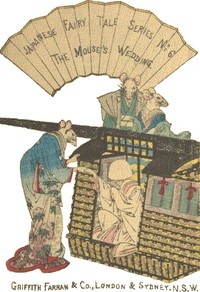
This digital edition of The Mouse's Wedding — Story, Setting & Ideas is described by source-level measurements including 3,663 words, 16 min estimated reading time, and 1 detected text section.
The text analysis averages about 23.0 words per sentence, while the detected sections provide another way to judge how the source is divided.
Project Gutenberg metadata also associates the work with “Weddings -- Juvenile fiction,” connecting these edition facts with the source record’s subject description.
Explore this collection
These alternatives are selected using recorded categories and estimated reading time.
About 27 minutes
Fairy Tales
5,991 recorded words. 11 minutes difference from this book's estimate.
View Gutenberg source #22406About 31 minutes
Fairy Tales
7,080 recorded words. 15 minutes difference from this book's estimate.
View Gutenberg source #66372About 49 minutes
Fairy Tales
11,097 recorded words. 33 minutes difference from this book's estimate.
View Gutenberg source #25464Search stored excerpts and compare books → Choose by your preferences →
Choices use stored catalog measurements. Estimates vary with reading speed. A shared category is a catalog label, not a claim that two books have the same argument or literary quality.
Search reads excerpt text stored with this catalog and links to its associated Gutenberg record. The connection is stored in the site database; this tool does not recheck that every excerpt is word-for-word identical to that external record. Excerpt search does not cover every chapter and does not verify historical publication dates.
Catalog snapshot checked: 2026-09-26. Coverage: 91 public books, 91 available source excerpts.
Calculated from edition completeness, EPUB availability, text structure and catalogue metadata. Not a user rating.
Total of 100 points, scaled to a 2.5-5.0 range. Editions with an empty description or a missing EPUB file are not scored.
Public-domain source text
The source text is kept in the dedicated reader, separate from this catalogue record and its commentary.
The story opens by naming the white mouse Kanemochi as a servant of Daikoku, the God of Wealth, immediately grounding the tale in Japanese folklore. His wife Onaga and their son Fukutaro are described as discreet, never venturing into the parlor or kitchen to avoid the cat. This detail establishes both the domestic hierarchy and the mortal danger that shapes their cautious lives.
The narrative then moves briskly into marriage negotiations, employing a go-between to arrange a match with Chudayu's daughter Hatsuka. The exchange of gifts—including dried bonito, cuttle-fish, and sake—follows a precise formula, and the bride blackens her teeth as a sign of fidelity. These customs are presented matter-of-factly, suggesting the intended audience is familiar with such rituals.
The protagonist mouse, Kanemochi, is explicitly a servant of Daikoku, the Japanese god of wealth. This detail is not merely decorative; it positions the mouse family within a divine hierarchy, implying that their prosperity and discretion are tied to their service. The names themselves carry meaning: Kanemochi means “money-holder,” Onaga “long tail,” and Fukutaro “good fortune man.” The story does not explain these names, leaving them as cultural cues for readers familiar with Japanese.
The mice live in a human-style house with a parlor and kitchen, yet they must hide from the cat. This blend of anthropomorphism and real animal danger creates a consistent internal logic. The parents’ decision to retire after their son’s marriage mirrors human social patterns, reinforcing the tale’s function as a moral and practical guide to proper conduct.
The marriage preparations are described in meticulous detail, from the go-between’s negotiations to the exchange of specific gifts. The bridegroom sends an obi (belt), silk cotton, dried bonito, dried cuttle-fish, white flax, sea-weed, and sake. The bride reciprocates with a linen kami-shimo (a formal garment), dried bonito, dried cuttle-fish, white flax, sea-weed, fish, and sake. The repetition of items like dried cuttle-fish and sake underscores their ritual importance.
The bride’s tooth-blackening is a striking custom: it signifies that she will not marry a second husband. The parents also instruct her to obey her husband, be dutiful to her father-in-law, and love her mother-in-law. These instructions are given without comment, reflecting the tale’s endorsement of traditional gender roles. The wedding ceremony itself involves the “three times three” exchange of sake cups, a Shinto-derived practice.
The text is part of the Kobunsha Japanese Fairy Tale Series, as indicated by the colophon listing other titles like Momotaro and The Tongue Cut Sparrow. The story is printed by Kobunsha in Tokyo, suggesting it was originally a bilingual or English-language edition for export or missionary use. The Project Gutenberg metadata credits David Thompson as the author, but the text itself says “Unknown” and the series was typically translated by Thompson.
The narrative is linear and declarative, with no dialogue or internal conflict. Events unfold in a logical sequence: introduction, negotiation, preparation, ceremony, and harmonious conclusion. The final sentence states that the couple lived “contented, prosperous and happy, and much to be congratulated.” This direct moral closure is typical of the fairy-tale genre, emphasizing social harmony over individual desire.
Readers should note that the catalog subjects list “Fairy tales — Japan” and “Children’s stories, Japanese,” but the text is a translation aimed at English-speaking audiences, not an original Japanese work. The customs depicted—tooth-blackening, sake exchange, go-between—are authentic, but the story simplifies them for foreign readers. The mouse characters serve as a lens into human social structures, making this a useful document for studying how Japanese folklore was adapted for Western children in the early 20th century.
Reading about the mice’s careful tooth-blackening and sake exchange, I felt that gentle formality again—that sense of tiny ceremonies holding a world together. It reminded me of snowy quiet, where small lives carry their own weight and meaning. There is a particular tenderness in The Little People of the Snow — Key Ideas to Explore, a softness that lingered long after I closed the page.
A brief reflection can help important ideas stay with you longer.