About 27 minutes
The Little People of the Snow — Key Ideas to Explore
Fairy Tales
5,991 recorded words. 4 minutes difference from this book's estimate.
View Gutenberg source #22406
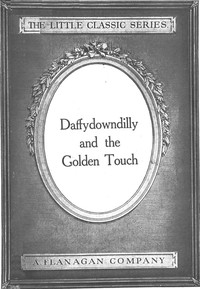
This digital edition of Daffydowndilly and the Golden Touch — Text and Context is described by source-level measurements including 7,080 words, 31 min estimated reading time, and 3 detected text sections.
The text analysis averages about 13.1 words per sentence, while the detected sections provide another way to judge how the source is divided.
Project Gutenberg metadata also associates the work with “Fairy tales,” connecting these edition facts with the source record’s subject description.
Explore this collection
These alternatives are selected using recorded categories and estimated reading time.
About 27 minutes
Fairy Tales
5,991 recorded words. 4 minutes difference from this book's estimate.
View Gutenberg source #22406About 16 minutes
Fairy Tales
3,663 recorded words. 15 minutes difference from this book's estimate.
View Gutenberg source #27456About 49 minutes
Fairy Tales
11,097 recorded words. 18 minutes difference from this book's estimate.
View Gutenberg source #25464Search stored excerpts and compare books → Choose by your preferences →
Choices use stored catalog measurements. Estimates vary with reading speed. A shared category is a catalog label, not a claim that two books have the same argument or literary quality.
Search reads excerpt text stored with this catalog and links to its associated Gutenberg record. The connection is stored in the site database; this tool does not recheck that every excerpt is word-for-word identical to that external record. Excerpt search does not cover every chapter and does not verify historical publication dates.
Catalog snapshot checked: 2026-09-26. Coverage: 91 public books, 91 available source excerpts.
Calculated from edition completeness, EPUB availability, text structure and catalogue metadata. Not a user rating.
Total of 100 points, scaled to a 2.5-5.0 range. Editions with an empty description or a missing EPUB file are not scored.
Public-domain source text
The source text is kept in the dedicated reader, separate from this catalogue record and its commentary.
This adaptation by Alpha Banta Benson, part of the Little Classic Series for school use, retells a Nathaniel Hawthorne story about a boy who tries to escape his schoolmaster, Mr. Toil. The catalog subject is simply "Fairy Tales," but the text is closer to a moral fable or allegory. Daffydowndilly believes Mr. Toil is a harsh taskmaster, yet every person he meets—a soldier, a fiddler, a lazy man—turns out to be another brother of Mr. Toil. The story’s structure is a circular journey: the boy runs away only to end up back at the schoolhouse, realizing that toil is inescapable and that his teacher’s smile can be kind.
Project Gutenberg lists Daffydowndilly and the Golden Touch under "Fairy Tales," but the excerpts show a story far removed from magic, princesses, or fantastical creatures. There is no golden touch in the provided text; the title may refer to a separate tale or a combined edition. The narrative is a didactic allegory about the value of work and perseverance. The boy’s encounters with various embodiments of Toil—each a different brother—form a series of lessons rather than a fairy-tale plot. The story’s origin in Hawthorne’s work (likely "Little Daffydowndilly," from A Wonder-Book for Girls and Boys) reinforces its moralistic, rather than fantastical, character. Readers expecting traditional fairy-tale elements will find a parable about accepting responsibility.
The excerpts reveal a clear structural pattern: Daffydowndilly encounters a new scene, feels safe, then spots Mr. Toil’s face. This happens with soldiers, dancers, and resting men. The stranger accompanying him repeatedly says, "You are mistaken again, my little friend," and explains that each figure is another Toil brother. The language is repetitive and rhythmic, suited for young readers: "Quick step! Forward march!" and "Oh, dear me!" The boy’s reactions are consistent—he starts to run, turns pale, or begins to cry. The story’s climax comes when the stranger’s voice reveals him to be Mr. Toil himself, showing that the boy has been with his schoolmaster all day. This circular structure reinforces the moral that one cannot escape toil.
The stranger who accompanies Daffydowndilly is never named, but his voice gives him away at the end: "Something in the stranger’s voice made Daffydowndilly look at him. There, again, was the face of old Mr. Toil!" This twist reveals that the boy’s guide was the very figure he fled. The story concludes with Daffydowndilly learning his lessons well and finding that Mr. Toil’s smile "was almost as pleasant as was that of his own mother." This resolution softens the earlier harshness, suggesting that toil becomes bearable when approached with effort. The adaptation omits any explicit moral statement, letting the narrative arc imply the lesson. The ending is abrupt, with no return to the frame or commentary on the boy’s future.
Readers may note that the story’s title promises a "Golden Touch" that does not appear in these excerpts; the complete book likely includes another tale. The adaptation’s brevity (32 pages) and placement in a school series suggest it was meant for classroom discussion about perseverance. The repeated encounters with Toil’s brothers offer a clear pattern for young readers to identify, and the circular journey provides a satisfying, if predictable, resolution.
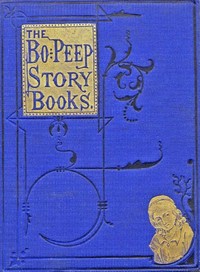
I found myself thinking of Daffydowndilly’s quiet surrender to Mr. Toil—that moment when running stops feeling like freedom—and somehow my mind drifted to the old Bo-Peep books on the shelf. There’s a softness in both, a way of seeing duty not as a trap but as a rhythm. This memory felt like finding a pressed flower: Bo-Peep Story Books — A Closer Reading carries that same gentle patience.
Answer a few questions and save a private reflection on this device.