About 332 minutes
Myths and Folk Tales of Ireland — A Reader’s Guide
Fairy Tales
76,156 recorded words. 25 minutes difference from this book's estimate.
View Gutenberg source #36540
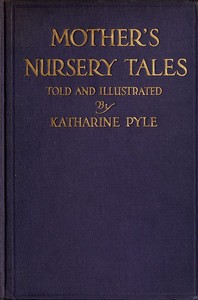
The source record for Mother's Nursery Tales — Story, Setting & Ideas measures this digital text at 70,464 words, 5 hr 7 min estimated reading time, and 9 detected text sections.
The text analysis averages about 16.7 words per sentence, while the detected sections provide another way to judge how the source is divided.
Project Gutenberg metadata also associates the work with “Fairy tales,” connecting these edition facts with the source record’s subject description.
Explore this collection
These alternatives are selected using recorded categories and estimated reading time.
About 332 minutes
Fairy Tales
76,156 recorded words. 25 minutes difference from this book's estimate.
View Gutenberg source #36540About 372 minutes
Fairy Tales
85,543 recorded words. 65 minutes difference from this book's estimate.
View Gutenberg source #38070About 235 minutes
Fairy Tales
53,948 recorded words. 72 minutes difference from this book's estimate.
View Gutenberg source #37193Search stored excerpts and compare books → Choose by your preferences →
Choices use stored catalog measurements. Estimates vary with reading speed. A shared category is a catalog label, not a claim that two books have the same argument or literary quality.
Search reads excerpt text stored with this catalog and links to its associated Gutenberg record. The connection is stored in the site database; this tool does not recheck that every excerpt is word-for-word identical to that external record. Excerpt search does not cover every chapter and does not verify historical publication dates.
Catalog snapshot checked: 2026-09-26. Coverage: 91 public books, 91 available source excerpts.
Calculated from edition completeness, EPUB availability, text structure and catalogue metadata. Not a user rating.
Total of 100 points, scaled to a 2.5-5.0 range. Editions with an empty description or a missing EPUB file are not scored.
Public-domain source text
The source text is kept in the dedicated reader, separate from this catalogue record and its commentary.
Katharine Pyle’s Mother’s Nursery Tales (1918) opens with an introduction that insists these are “not new fairy-tales” but “old, old, old” stories gathered from many countries. The table of contents lists 29 tales, ranging from familiar ones like “Cinderella” and “Jack and the Bean Stalk” to lesser-known entries such as “Brittle-Legs” and “The Nail.” Pyle, who also illustrated the volume, includes both color plates and black-and-white drawings. The excerpts reveal a storytelling voice that is direct and rhythmic, often using incremental repetition—for example, in “The Golden Goose,” the hero John encounters an old man who first drinks wine, then eats “a mountain of bread,” before producing a ship that grows from a model to full size.
Pyle’s prose is plain and conversational, avoiding ornate description. In “The Three Spinners,” the mother “gave her a good beating” and the girl “cried out until she could be heard even into the street.” The queen, hearing the noise, “stopped her coach and entered the house.” The sentences are short, the action immediate. This directness extends to dialogue: characters speak plainly, as when the queen says, “This girl of yours must be a very fine spinner.” The effect is that the tales feel told aloud, not written. Pyle also uses repetition for emphasis, as in the introduction’s triple “old, old, old.” Readers will notice how she builds scenes through incremental actions—the old man in “The Golden Goose” first drinks, then eats, then produces the ship—creating a cumulative rhythm that suits oral tradition.
The excerpts show several structural patterns. One is the threefold repetition: in “The Golden Goose,” John’s kindness to the old man is rewarded three times (wine, bread, ship). Another is the helper figure—the old man appears “as though he had never moved” and provides magical aid. The queen in “The Three Spinners” is deceived by a mother’s lie, setting up a comic misunderstanding. Pyle also uses incremental lists: the ship’s sails were “of silk, its hull of silver, and its masts of beaten gold.” These patterns are typical of fairy tales, but Pyle executes them with a light touch. The excerpts do not reveal how each tale ends, but the patterns suggest that kindness and cleverness will be rewarded, while laziness or greed may be punished—though the “Three Spinners” excerpt leaves the lazy girl’s fate uncertain.
Pyle’s introduction is a key to her approach. She addresses the child reader directly: “These are not new fairy-tales… They are old, old, old. As old as the hills or the human race.” This framing emphasizes the stories’ antiquity and universality. She also notes they come “some from one country, and some from another,” hinting at a global collection. The introduction does not name specific sources, but the tales are largely European. Pyle’s tone is affectionate and slightly formal, as if speaking to a child on her lap. This sets expectations for the stories that follow: they are traditional, but retold with warmth. Readers should note that the introduction does not summarize the tales; it simply prepares the listener for a journey into old, familiar territory.
The excerpts are incomplete, cutting off mid-tale. “The Golden Goose” ends with John marrying the princess and being called “the wise King John,” but the golden goose disappears. “The Three Spinners” breaks off just as the queen sets the lazy girl to spin three rooms full of flax. The reader does not learn how the girl escapes her predicament. This incompleteness is a reminder that these are fragments from a longer collection. The full book would resolve each story, but the excerpts highlight Pyle’s skill at creating suspense. The lazy girl’s terror—“She had never spun a thread in her life”—is palpable, and the reader is left wondering how she will avoid punishment. This technique of leaving threads dangling is effective in a collection meant to be read aloud, one tale at a time.
When reading Mother’s Nursery Tales, pay attention to how Pyle varies the length and complexity of her tales. Some, like “The Golden Goose,” are episodic and expansive; others, like “The Three Spinners,” are tighter and more focused on a single dilemma. The illustrations, though not reproduced in this digital edition, were an integral part of the original book. The stories reward reading aloud, with their rhythmic repetitions and clear dialogue. Approach them as a sampler of traditional fairy tales, retold with a distinctive, motherly voice.
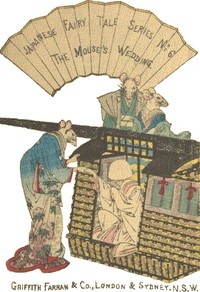
There’s something tender in how Katharine Pyle lets these old tales unfold slowly, with their patient lists and repetitions. I find myself thinking of that same hush in The Mouse’s Wedding — Story, Setting & Ideas, as if both books remember a quieter time for listening. It lingers, that feeling, long after the page is turned.
Your answers remain private and are stored only in this browser.