About 401 minutes
Household Stories by the Brothers Grimm — A Reader’s Guide
Fairy Tales
92,025 recorded words. 29 minutes difference from this book's estimate.
View Gutenberg source #19068
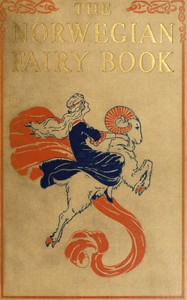
The source record for The Norwegian Fairy Book — Context and Discussion measures this digital text at 85,543 words, 6 hr 12 min estimated reading time, and 9 detected text sections.
The text analysis averages about 20.2 words per sentence, while the detected sections provide another way to judge how the source is divided.
Project Gutenberg metadata also associates the work with “Fairy tales -- Norway,” connecting these edition facts with the source record’s subject description.
Explore this collection
These alternatives are selected using recorded categories and estimated reading time.
About 401 minutes
Fairy Tales
92,025 recorded words. 29 minutes difference from this book's estimate.
View Gutenberg source #19068About 404 minutes
Fairy Tales
92,747 recorded words. 32 minutes difference from this book's estimate.
View Gutenberg source #74076About 332 minutes
Fairy Tales
76,156 recorded words. 40 minutes difference from this book's estimate.
View Gutenberg source #36540Search stored excerpts and compare books → Choose by your preferences →
Choices use stored catalog measurements. Estimates vary with reading speed. A shared category is a catalog label, not a claim that two books have the same argument or literary quality.
Search reads excerpt text stored with this catalog and links to its associated Gutenberg record. The connection is stored in the site database; this tool does not recheck that every excerpt is word-for-word identical to that external record. Excerpt search does not cover every chapter and does not verify historical publication dates.
Catalog snapshot checked: 2026-09-26. Coverage: 91 public books, 91 available source excerpts.
Calculated from edition completeness, EPUB availability, text structure and catalogue metadata. Not a user rating.
Total of 100 points, scaled to a 2.5-5.0 range. Editions with an empty description or a missing EPUB file are not scored.
Public-domain source text
The source text is kept in the dedicated reader, separate from this catalogue record and its commentary.
The Norwegian Fairy Book presents a selection of tales from Norway's oral tradition, translated by Frederick H. Martens and edited by Clara Stroebe. The preface emphasizes that these stories come from 'hinds and huntsmen, woodchoppers and fisherfolk,' grounding them in the hard, solitary lives of rural people. The collection includes the original 'Peer Gynt' legend, before Ibsen's symbolic reworking, and stories like 'The Isle of Udröst' and 'Storm Magic,' which the translator describes as bringing 'the breath of the Norse mountains or the tang of the spindrift on Northern seas.'
The tale of 'Ola Storbaekkjen' exemplifies a recurring pattern in these stories: a mortal's combative encounter with supernatural beings. Ola, a man known for besting 'the hill people of Halling and Valders,' is taken into a hill after a scuffle with a man bearing 'gilded goat's horns.' Inside, he finds a hall adorned with silver, but refuses to eat the offered food, suspicious of its quality. The fight continues for over fourteen days, until church bells ringing on three Thursday evenings force the hill folk to release him. The story's note observes a 'primitive enjoyment of brawling and pummeling,' and indeed the physicality is relentless—Ola emerges 'black and blue' and 'quite out of his mind,' still wanting to break the goat's horns. This tale shows how the collection treats the supernatural not with awe but with a rough, earthy humor and a focus on physical struggle.
'The Cat Who Could Eat So Much' offers a starkly different but equally visceral kind of encounter. A cat, deemed too voracious, is to be drowned, but after eating a dish of mush and a pot of fat, she begins consuming people and animals in a chain: the man, the woman, the bell-cow, and presumably more. Each encounter follows a rigid formula—the cat greets, is asked if she has eaten, replies 'only a little,' and then announces her intention to eat the speaker. The repetition creates a grimly comic rhythm, and the cat's matter-of-fact tone ('My fast has hardly been broken') contrasts with the escalating absurdity of her consumption. Unlike Ola's prolonged brawl, this tale compresses violence into a swift, logical progression, where appetite itself becomes a monstrous, unstoppable force. The story's simplicity—no moral, no explanation—leaves the reader with the unsettling image of a cat that simply keeps eating.
The translator's preface highlights the 'directness and simplicity' of the tales' telling, a quality evident in the excerpts. Sentences are short, dialogue is unadorned, and events unfold without psychological elaboration. In 'Ola Storbaekkjen,' the narration states plainly: 'A man with a pair of gilded goat's horns came along and butted Ola.' No metaphor, no embellishment. Similarly, the cat's dialogue repeats with minimal variation, creating a chant-like effect. This stylistic choice roots the stories in oral performance, where clarity and momentum matter more than literary flourish. The preface also notes that each story brings 'the breath of the Norse mountains or the tang of the spindrift on Northern seas,' a claim supported by the settings: Ola's tale occurs at a hay harvest under a penthouse, and the cat's story begins on a threshing-floor. These details anchor the fantastic in a recognizable, rural Norwegian landscape, making the supernatural feel like a natural extension of everyday life.
Readers approaching The Norwegian Fairy Book will find tales that resist the softened, moralized versions common in later collections. The stories preserve a raw, often brutal logic: bargains are kept through force, appetites are insatiable, and the boundary between human and spirit is porous and perilous. Pay attention to the physical details—the silver plates, the gilded horns, the dish of mush—as they carry the weight of the narrative. The collection rewards those who read for incident and texture rather than allegory.
I finished the last tale in The Norwegian Fairy Book—the one about cats and mountains—and found myself pausing, remembering how those same blunt sentences and odd, earthly spirits had lingered with me elsewhere. There’s a particular hush in the Fairy Book — Themes and Context that matches it, a quiet weight, like sitting with a friend who doesn’t need to fill every silence.
Build a private reading journal entry for this title.