About 200 minutes
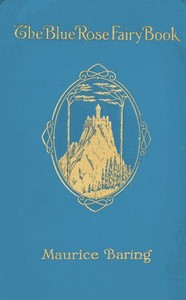
The Blue Rose Fairy Book — Themes and Context
Fairy Tales
45,793 recorded words. 7 minutes difference from this book's estimate.
View Gutenberg source #36008
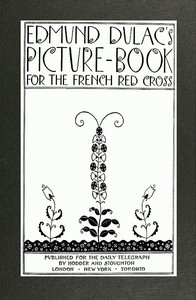
For Edmund Dulac's Picture-Book for the French Red Cross — Story, Setting & Ideas, the stored edition analysis reports 47,513 words, 3 hr 27 min estimated reading time, and 6 detected text sections.
The text analysis averages about 20.4 words per sentence, while the detected sections provide another way to judge how the source is divided.
Project Gutenberg metadata also associates the work with “Fairy tales,” connecting these edition facts with the source record’s subject description.
Explore this collection
These alternatives are selected using recorded categories and estimated reading time.
About 200 minutes
Fairy Tales
45,793 recorded words. 7 minutes difference from this book's estimate.
View Gutenberg source #36008About 228 minutes
Fairy Tales
52,399 recorded words. 21 minutes difference from this book's estimate.
View Gutenberg source #73256About 235 minutes
Fairy Tales
53,948 recorded words. 28 minutes difference from this book's estimate.
View Gutenberg source #37193Search stored excerpts and compare books → Choose by your preferences →
Choices use stored catalog measurements. Estimates vary with reading speed. A shared category is a catalog label, not a claim that two books have the same argument or literary quality.
Search reads excerpt text stored with this catalog and links to its associated Gutenberg record. The connection is stored in the site database; this tool does not recheck that every excerpt is word-for-word identical to that external record. Excerpt search does not cover every chapter and does not verify historical publication dates.
Catalog snapshot checked: 2026-09-26. Coverage: 91 public books, 91 available source excerpts.
Calculated from edition completeness, EPUB availability, text structure and catalogue metadata. Not a user rating.
Total of 100 points, scaled to a 2.5-5.0 range. Editions with an empty description or a missing EPUB file are not scored.
Public-domain source text
The source text is kept in the dedicated reader, separate from this catalogue record and its commentary.
This 1915 picture-book, published for the French Red Cross during the First World War, collects seventeen tales and songs from Chinese, Persian, French, and Arabian traditions, each introduced by a full-page colour illustration by Edmund Dulac. The volume’s structure—alternating between fairy tales, folk songs, and love stories—creates a deliberate contrast between the comic and the tragic, the magical and the mundane.
The Cinderella excerpt, for instance, departs from the familiar Perrault version by having the godmother remark that the glass slippers ‘were real’ and could not vanish like the coach. This small change reframes the story’s central object: the slipper becomes a token not of enchantment but of stubborn material fact, a clue that the book’s magic often works through precise, tangible details.
The table of contents spans from China (‘The Story of the Bird Feng’) to Persia (‘Laylá and Majnún’), from Hans Andersen’s Denmark to the Thousand and One Nights. The book’s subtitle—‘For the French Red Cross’—gives it a specific historical purpose: it was sold to raise funds for war relief. Yet the stories themselves are deliberately escapist, offering a world of sultans, princesses, and magical birds. The juxtaposition is striking: a wartime charity volume that dwells on love, beauty, and transformation.
Dulac’s illustrations, listed in detail, are not mere decorations but integral to the book’s identity. Each picture is described with a caption that often quotes or paraphrases a key moment—‘The wonderful bird, like a fire of many colours come down from heaven’—suggesting that the images and text were designed to complement each other. The frontispiece, ‘Jusef and Asenath,’ hints at an Egyptian love story that closes the collection, giving the book a symmetrical arc from East to West.
The Cinderella excerpt reveals a version that plays with the rules of enchantment. When the clock strikes twelve, the coach vanishes, but the godmother later explains that the slippers ‘were real’ and could not disappear. This detail creates a tension between the temporary and the permanent: the pumpkin and mice revert, but the glass slipper endures. The godmother’s parting line—‘Perhaps somebody with a capital S has picked it up’—is a sly joke that acknowledges the story’s own conventions while winking at the reader.
The excerpt also emphasises Cinderella’s agency. She hides the other slipper ‘in her bosom along with other state secrets,’ a phrase that treats her as a keeper of knowledge rather than a passive victim. The prime minister’s search is described with comic exasperation—‘the Prince was leading him a dog’s life’—and the sisters’ attempts to squeeze into the slipper are met with Cinderella’s silent laughter. The tone is wry and knowing, balancing the fairy-tale structure with a modern, almost ironic voice.
Interspersed among the longer tales are several songs: ‘Young Rousselle,’ ‘The Little Seamstress,’ ‘My Lisette,’ and ‘The Chilly Lover.’ These are short, often comic pieces that contrast with the elaborate love stories. ‘The Chilly Lover,’ for example, opens with the line ‘O Ursula, for thee / My heart is burning,— / But I’m so cold!’—a paradox that undercuts the romantic intensity of ‘Laylá and Majnún’ or ‘Aucassin and Nicolette.’
The inclusion of a carol, ‘Three Kings of Orient,’ adds a religious note, while ‘Cerberus, the Black Dog of Hades’ introduces classical mythology. This mix of genres—fairy tale, song, carol, myth—gives the book a varied texture. The songs are printed with their original French titles, suggesting a nod to the volume’s Franco-British context. The reader moves from the pathos of ‘The Nightingale’ to the bawdy humour of ‘Young Rousselle,’ a shift that keeps the collection unpredictable.
Because the excerpts cover only a fraction of the book, readers should expect a wide tonal range: the comic Cinderella variant sits alongside the tragic Persian romance of Laylá and Majnún, and the songs offer quick, often sardonic interludes. Pay attention to how Dulac’s illustrations frame each story—the captions hint at the visual emphasis. The book rewards those who read across its sections, noticing how the same motifs (magic objects, love-sick princes, clever heroines) recur in different cultural guises.
Reading about the glass slipper that stays real after the magic fades, I remembered finding my grandmother’s old copy of The Fairy Ring one rainy afternoon. Her marginal notes, pencil-thin, pointed to tales where kindness outlasts enchantment. The Fairy Ring — A Reader’s Guide felt like sitting beside her, gently turning pages together, knowing some truths need no spell to remain.
Save your reaction, strongest insight, and memorable passage.