About 49 minutes
The King of Root Valley and his curious daughter — Context and Discussion
Fairy Tales
11,097 recorded words. 2 minutes difference from this book's estimate.
View Gutenberg source #25464
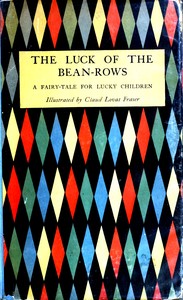
Before opening The luck of the bean-rows, a fairy tale — Edition Insights, the edition data offers a quick orientation: 11,599 words, 51 min estimated reading time, and 2 detected text sections.
The text analysis averages about 24.4 words per sentence, while the detected sections provide another way to judge how the source is divided.
Project Gutenberg metadata also associates the work with “Fairy tales,” connecting these edition facts with the source record’s subject description.
Explore this collection
These alternatives are selected using recorded categories and estimated reading time.
About 49 minutes
Fairy Tales
11,097 recorded words. 2 minutes difference from this book's estimate.
View Gutenberg source #25464About 31 minutes
Fairy Tales
7,080 recorded words. 20 minutes difference from this book's estimate.
View Gutenberg source #66372About 27 minutes
Fairy Tales
5,991 recorded words. 24 minutes difference from this book's estimate.
View Gutenberg source #22406Search stored excerpts and compare books → Choose by your preferences →
Choices use stored catalog measurements. Estimates vary with reading speed. A shared category is a catalog label, not a claim that two books have the same argument or literary quality.
Search reads excerpt text stored with this catalog and links to its associated Gutenberg record. The connection is stored in the site database; this tool does not recheck that every excerpt is word-for-word identical to that external record. Excerpt search does not cover every chapter and does not verify historical publication dates.
Catalog snapshot checked: 2026-09-26. Coverage: 91 public books, 91 available source excerpts.
Calculated from edition completeness, EPUB availability, text structure and catalogue metadata. Not a user rating.
Total of 100 points, scaled to a 2.5-5.0 range. Editions with an empty description or a missing EPUB file are not scored.
Public-domain source text
The source text is kept in the dedicated reader, separate from this catalogue record and its commentary.
The tale opens with a direct address to the reader: an old couple, poor and childless, discover a baby in their bean field. The narrator inserts a personal aside—'I wish I owned as much!'—when describing their cabin and field, establishing a conversational, intimate voice. The child, already weaned and speaking, calls them 'mamma and pappa' without hesitation. The couple names him 'The Luck of the Bean-rows,' a name derived from the very place of his arrival, grounding the fantastical in the domestic.
This opening establishes a pattern: the mundane (bean farming, a cabin) is infused with the marvelous (a foundling with advanced intelligence). The narrator's playful asides and the couple's practical, affectionate responses set a tone of gentle whimsy that carries through the excerpts.
The story begins not with a grand prophecy but with a weeding session. The old woman finds 'a small bundle very carefully tied up' among the thickest weeds. Inside is a boy 'eight or ten months old to look at, but quite two years in intelligence.' The child's first meal is boiled beans, which he eats 'very prettily.' The couple's joy is immediate and practical: they worry about dew, build a fire of dry bean pods, and prepare a bean-pap sweetened with honey. The old man dances the boy on his knee 'in the way the ladies ride in the Park,' a detail that hints at a world beyond their field.
The naming scene is the tale's first act of world-building. The old woman, 'though she was but a simple peasant she was quickwitted,' proposes 'The Luck of the Bean-rows' because the child came to them in the bean field, 'the best of luck, to comfort us in our old age.' The name is both literal and symbolic, tying the boy's identity to the family's livelihood and fortune.
Later in the excerpts, the Luck acquires a magical carriage from a princess named Pea-Blossom. The carriage responds to the command 'Off, chick pea!' and launches into a wild, uncontrollable flight. The Luck 'outraced the sun, swept round the globe, caught it up and again outstripped it,' experiencing rapid shifts from day to night. The narrator notes that the princess 'had no time to say how I was to stop it,' leaving the Luck to deduce the solution himself.
His logical approach—'considering that Pea-Blossom sent her carriage flying through the world with “Off, chick pea!” it is just possible we can stop it by saying the exact opposite'—shows his nimble wit. He cries 'Stop, chick pea!' and the carriage halts instantly. The narrator wryly comments, 'Could a whole learned society have come to a more sensible conclusion?' This moment blends fairy-tale magic with a playful respect for reason.
After stopping the carriage, the Luck finds himself in a 'boundless plain, so parched, so stony, so wild that there was never a bush to lie under.' He is not anxious. He opens one of the three caskets Pea-Blossom gave him, plants its contents in the sand with his hoe, and wishes for a tent, supper, and a bed. Immediately, a 'splendid pavilion in the shape of a pergola of sweet peas' rises, supported on ten gold props, with leafy curtains, crystal lustres, and Venetian mirrors. A pea leaf drops and becomes a carpet 'variegated with all the colours of the rainbow and many more,' surrounded by tables of pastries.
This sequence demonstrates the Luck's resourcefulness and the tale's love of lavish, plant-based transformations. The caskets contain seeds that grow into whatever he needs, a motif that echoes the bean field of his origin. The narrator's deadpan delivery—'It grew up, it spread'—contrasts with the opulence of the description.
Throughout the excerpts, the narrator frequently interjects with asides and opinions. When describing the couple's poverty, he says 'I wish I owned as much!'—a remark that aligns him with the reader. Later, he comments on the Luck's intelligence: 'he was nimble-witted, remember.' These intrusions create a sense of a storyteller guiding the audience, not merely reporting events.
The tale also uses playful comparisons and learned references. The carriage's sudden stop is described as 'you could not have stopped it quicker if you had nailed it down.' The location of the desert plain is debated by travelers: 'Bruce says it was at the sources of the Nile. M. Douville places it on the Congo, and M. Saillé at Timbuctoo.' Such mock-scholarly asides add a layer of humor and sophistication to the fairy-tale structure.
Readers approaching The Luck of the Bean-rows should attend to the narrator's voice, which is as much a character as the Luck himself. The tale rewards attention to its small, domestic details—bean-pap, bean-chaff beds, a hoe—that ground the magic. The excerpts suggest a story that moves from a humble field to a globe-spanning adventure, but always returns to the logic of beans and the warmth of the old couple's cabin. Let the narrator's asides guide your reading; they are the thread that ties the fantastical to the familiar.
That old couple in The Luck of the Bean-rows reminded me how a found thing can rearrange a whole quiet life. The same gentle wonder sits inside Edmund Dulac's Picture-Book for the French Red Cross — Story, Setting & Ideas, where each page holds a small, patient magic. I keep thinking how soft that feeling is, like a warm breath on a windowpane.
Answer a few questions and save a private reflection on this device.